Failure is the path to success. (I say this because I consider myself a consummate failure. I'm biased.) Yes, I know it sounds pat and perhaps trite. But nothing worthwhile is possible without failure and rejection and pain.
~
I started my college years in a graphic design program. I thought I belonged there because the only thing I was any good at in high school was art.
I hated the program. I didn't feel like my instructors actually taught anything. We did project after project without much direction. Only after we were in the very late stages of an assignment did we receive our teachers' input, and by input I mean criticism. Usually by then it was too late to do anything about it.
I made lots of Bs and I considered each one to be a failure. I wanted to be making As. I didn't care so much about the projects themselves, I just wanted to be successful and to be recognized as such. I hated being in front of people and having my shortcomings examined.
Excuse me, did I say "my shortcomings"? I meant the shortcomings of my work. Except I really meant mine, because in my mind they were one and the same.
~
After a year and a half I left the program to study horrible things that happened in the past as well as horrible things that are still happening today. I continued trying to make art, but grew more and more frustrated with my output. I felt I was not improving, that my technique had stagnated and was indeed growing worse. And eventually I quit drawing and painting all but completely. I very rarely do it now.
For years I couldn't think about art or design without feeling like a catastrophic loser. Only very recently have I been able to look back at that time without feeling ashamed.
No one told me to feel this way. I decided I sucked on my own.
After some time (as long as I could manage) I accumulated 120 credits and was made to leave college. I failed to find a job in my field (although what field that was I'm still not exactly sure) and ended up working as a secretary.
By this time my interest in dance had ballooned immensely. Dance occupied all of my free time and then some. I felt desperate to try to make it my career. And after only two years of full-time employment I quit, hoping I could perhaps work a part-time job and get by otherwise on dance alone.
This didn't work. I tried teaching as many as six classes a week at one point, desperate to reach out to students in different areas. At many of these classes, due to rent and gas, I was making a loss.
I felt like a moron for quitting my job. I felt like a delinquent for not having a job. I felt like a failure because my plan wasn't working. I felt horrible.
In 2010 I stopped teaching many of my classes. Simultaneously, my hours at my part time job were decimated. I had nothing to do and was bringing in next to no income.
I stared into the void. The void told me to write a novel about vampires.
No, I thought, that's a really stupid idea. I should try to get another job. A real job, with regular hours, where I put on normal clothes and go into a normal office with normal people. I did some listless job-hunting online and submitted a few applications to a few places. I never heard back.
I wrote the novel, still thinking it was a stupid idea. Then I rewrote it five times. I started teaching dance classes again. The classes grew. The classes shrank. I got a second part time job.
Now the novel is finished. I consider it my first successful project. Not that I have convinced someone to publish it yet (I haven't), or even to represent it (nope not that either), but because I love it from the bottom of my heart. It might be total crap, but it is my beloved crap, the crap I have poured my heart and soul into.
Why can I love this crap when I couldn't love most of my previous crap?
Perhaps because I saw it as an experiment, a way to express something weird within me, and not as a competition with some Platonic ideal of high art or literature. I suppose I failed to live up to that ideal so many times, eventually I was forced to realize that all I will do for the rest of my life is fail to live up to the ideal.
I accepted my status as a complete failure, said "fuck it", and kept working anyway. The time since then has been the only time in my life when I have ever been able to feel like I have accomplished any measure of success.
~
We define success or failure by our own version of the ideal. Now every time I feel trapped my by own ideals, I remind myself that I'm a failure and I get right back to work. And I'm almost always proud of what I manage to accomplish.
Since I've accepted myself as a failure I don't care so much about impressing other people. I've realized I'd rather communicate with other people, or at least entertain them, than impress them.
I would still love to make a living, or even half a living, from my writing or from dance. But even if I never do, it can't make me any more of a failure.
~
Failure is an intrinsic part of making art. Artists transmit ideas into reality, but it isn't a download kind of process; the works we create will never and can never perfectly match our ideas of what the work should be. Our mediums are flawed. Reality and the mind don't mesh perfectly. Even verbalizing an idea distorts it somehow.
You must accept that you will fail and then make the attempt anyway. Every attempt will result in failure.
I lied to you earlier. Failure is not really the path to success. Success is just a particularly appealing brand of failure. Failure is all that there is.
I look back and I am glad for all the ways I have failed. I look forward and hope to keep failing with my whole heart.

Showing posts with label ramblings. Show all posts
Showing posts with label ramblings. Show all posts
Thursday, March 15, 2012

Sunday, January 22, 2012
Side effects
So I am on a new drug that's supposed to help me manage my Fibromyalgia pain. For quite a long time I was terrified of getting pharmaceutical help for my condition, but after a resounding success with a sleep drug I started last year I thought what the hell, let's give this a shot too.
The drug, which I don't really want to call out by name--let's just say it's popular for FMS--is sort of helping with the pain, by means of inducing a state in which I feel my nerves are swaddled in cotton. An odd swimming sensation sometimes overcomes me and I hear "Across The Universe" on near-constant repeat. (last detail an exaggeration)
I am not sure I like the main effect of the drug, not to mention the side effects.
I'm having some side effects. Or at least I think I am. Sometimes it's hard to tell what's the drug and what's me being a hypochondriac freak.
First off, I think it's thrown off my equilibrium. I can't spin like I normally can without feeling dizzy, and I feel unstable on my toes. This might not sound so bad--how often do you have to spin around until you make yourself sick?--but spinning is a big part of what I do for fun and sometimes profit, i.e. bellydance. But is this really because of the drug or because I didn't practice much in December?
Doubt sets in.
My hunger impulses are out of whack. I don't feel particularly hungry at all, ever. But I always feel like I could eat. After eating a good meal I don't really feel full. Is this me or the drug?
So I try not to eat except at meals, knowing I can just keep eating mindlessly if I don't police myself. Then sometimes I start to feel lightheaded. Is this from hunger or is it another side effect?
I feel tired and forgetful. Often I'm not sure what I should be doing, but I feel I should be doing something. I have trouble with word recall and sometimes when faced with a complex problem my brain simply freezes up and throws a Blue Screen of Death. But, uh, welcome to being Sara. I've been this way for as long as I can remember. Is this me or the drug?
Sometimes I feel happy, like REALLY happy, for no goddamn reason. Less often I feel inexplicably sad. Me or the drug?
I could go on.
For years, my doctors placed my well being squarely in my hands. At the time there was no drug for Fibromyalgia. I was on my own. Eat right, sleep enough and on a regular schedule, and exercise enough (but not too much) and you will feel all right, they said.
Now, as a result, whenever I feel shitty I immediately want to blame myself. If I hadn't slept in 30 minutes, I'd feel okay. If I had exercised yesterday I'd have more energy. If I hadn't waited to eat breakfast I wouldn't have a headache.
And now, experiencing these symptoms, I'm not sure what is at fault: me or the drug. I'm awfully confused. I want to believe that in the end the drug will help, because I want to believe there is a solution. Somewhere deep in my shriveled heart I still want to believe that I can feel well most of the time. Not because health itself is that appealing to me, but because I feel like my condition gets in the way of my dreams. Sometimes I let myself think about what I could be like if I just had some energy.
I don't want to sound maudlin. My bad days are really not so bad. I'm never going to die from this and it probably isn't going to get worse unless I let myself go. But hope opens you up to this odd feeling: the idea that in returning back to normal something has been lost.
Should I put up with the side effects and hold on to that hope or should I give up?
The drug, which I don't really want to call out by name--let's just say it's popular for FMS--is sort of helping with the pain, by means of inducing a state in which I feel my nerves are swaddled in cotton. An odd swimming sensation sometimes overcomes me and I hear "Across The Universe" on near-constant repeat. (last detail an exaggeration)
I am not sure I like the main effect of the drug, not to mention the side effects.
I'm having some side effects. Or at least I think I am. Sometimes it's hard to tell what's the drug and what's me being a hypochondriac freak.
First off, I think it's thrown off my equilibrium. I can't spin like I normally can without feeling dizzy, and I feel unstable on my toes. This might not sound so bad--how often do you have to spin around until you make yourself sick?--but spinning is a big part of what I do for fun and sometimes profit, i.e. bellydance. But is this really because of the drug or because I didn't practice much in December?
Doubt sets in.
My hunger impulses are out of whack. I don't feel particularly hungry at all, ever. But I always feel like I could eat. After eating a good meal I don't really feel full. Is this me or the drug?
So I try not to eat except at meals, knowing I can just keep eating mindlessly if I don't police myself. Then sometimes I start to feel lightheaded. Is this from hunger or is it another side effect?
I feel tired and forgetful. Often I'm not sure what I should be doing, but I feel I should be doing something. I have trouble with word recall and sometimes when faced with a complex problem my brain simply freezes up and throws a Blue Screen of Death. But, uh, welcome to being Sara. I've been this way for as long as I can remember. Is this me or the drug?
Sometimes I feel happy, like REALLY happy, for no goddamn reason. Less often I feel inexplicably sad. Me or the drug?
I could go on.
For years, my doctors placed my well being squarely in my hands. At the time there was no drug for Fibromyalgia. I was on my own. Eat right, sleep enough and on a regular schedule, and exercise enough (but not too much) and you will feel all right, they said.
Now, as a result, whenever I feel shitty I immediately want to blame myself. If I hadn't slept in 30 minutes, I'd feel okay. If I had exercised yesterday I'd have more energy. If I hadn't waited to eat breakfast I wouldn't have a headache.
And now, experiencing these symptoms, I'm not sure what is at fault: me or the drug. I'm awfully confused. I want to believe that in the end the drug will help, because I want to believe there is a solution. Somewhere deep in my shriveled heart I still want to believe that I can feel well most of the time. Not because health itself is that appealing to me, but because I feel like my condition gets in the way of my dreams. Sometimes I let myself think about what I could be like if I just had some energy.
I don't want to sound maudlin. My bad days are really not so bad. I'm never going to die from this and it probably isn't going to get worse unless I let myself go. But hope opens you up to this odd feeling: the idea that in returning back to normal something has been lost.
Should I put up with the side effects and hold on to that hope or should I give up?
Tuesday, December 20, 2011
Resolutions
2012 is coming. I better get some stuff done before the world ends. (John Hodgman says it will and I find his books to be totally credible. In fact they are pretty much my most trusted sources of information, ever.)
Last year I went insane with monthly checklists (you can easily find them in the archives) and all kinds of related self-flagellation. This resulted in a hardcore burnout period, especially after I got my second part time job and said goodbye to a good amount of my free time.
I've transitioned into a kinder "do what you can" philosophy since then. I try not to stress about the things I'm not getting done because that list is infinitely long and contemplating it too deeply will make me go insane. Instead I might as well try to enjoy life and feel good about myself from time to time.
Still, there are some things I'd like to get done in 2012. Here are some of them.
And of course, I wish and hope that I will find a good agent for my book, and I'm going to try my best, but in the end it's not up to me. If I haven't found an agent by the end of 2012 I will probably go ahead and self-publish on Amazon, and I'm excited that possibility for its own reasons.
What are your resolutions?
Last year I went insane with monthly checklists (you can easily find them in the archives) and all kinds of related self-flagellation. This resulted in a hardcore burnout period, especially after I got my second part time job and said goodbye to a good amount of my free time.
I've transitioned into a kinder "do what you can" philosophy since then. I try not to stress about the things I'm not getting done because that list is infinitely long and contemplating it too deeply will make me go insane. Instead I might as well try to enjoy life and feel good about myself from time to time.
Still, there are some things I'd like to get done in 2012. Here are some of them.
- I would like to finish the first draft of my second novel. Right now it's about half done, and I think if I make it a priority for a few months it will materialize.
- I would like to produce another Doomsday Cabaret show.
- I would like to get in better shape. If possible I would like to be able to run a ten minute mile. (That may not sound too fast, but, let me tell you, it would be an improvement over the current situation.)
- I'd like to write a few more short stories and it would be great if I could get a short story published.
- I want to spend less time on Facebook and more time reading.
- I'd like to make at least one more bellydance costume.
- I want to feel good about what I perform at TribalCon, which will mean preparing well.
- I'd like to teach some workshops out of town (although I don't have much control over whether or not that comes to pass).
- I'd like to write an article about bellydance and publish it somewhere.
- I want to save more money and eat more fruits and vegetables. (Exciting!!)
And of course, I wish and hope that I will find a good agent for my book, and I'm going to try my best, but in the end it's not up to me. If I haven't found an agent by the end of 2012 I will probably go ahead and self-publish on Amazon, and I'm excited that possibility for its own reasons.
What are your resolutions?
Saturday, December 10, 2011
"Do you dance for your husband?"
A patron asked me this at the show last night.
I couldn't tell how she meant the question. Discomfort in her eyes. Perhaps she was trying to square what she'd seen in my performance with her own personal paradigm of sexuality. Perhaps she was trying to submit a gentle complaint, to police my behavior in a subtle way. Perhaps she was merely curious about what I do at home.
"I dance for everyone," I said, sharing her unease.
I get asked this question a lot, more frequently by new students than anyone else. Always women, never men. Sometimes it's a related question: "Can you teach me how to dance for my husband?" Sometimes it's another variation: "Can you dance for my husband?" ("I'll pay you." "It's his birthday.")
They've been asking me this for years but I never get used to it.
I won't pretend I don't understand what they're seeing: a girl (although I may not qualify as such for much longer), scantily clad, moving her hips and chest around in rhythmic patterns. I get it. It reads, for them, as an unsubtle display of female sexuality.
I am not offended by their perception of what I am doing and why. It may not mesh with my intent, but so what? If I made my intent for each performance completely transparent, it would stop being interesting, and I think it might very well stop being art. Art, to me, exists in the vast space between the intent of the creator and the perception of the audience. It's negotiated.
What bothers me is always the tone. Let's put your dance in an acceptable context, shall we? You are doing this for a man. And he is your husband.
I won't go on about my motivations for dancing because putting them to words would mutilate them. But let's suppose I intended for my audience to take everything on face value alone: girl in lots of makeup and a (sort of) revealing costume, shaking it. Let's say my intention was really just to titillate.
I will do this for whoever the fuck I want, thank you. And I don't care what you think of that. If you want to read me as a sex object, go ahead. Just don't try to cram the patriarchy down my throat. I know you can see a wedding ring on my finger, but don't pretend you understand my relationship with my husband, and don't you dare try to enforce what you think it should be on me.
I will dance for the enjoyment of everyone in the audience, male or female, young or old. To be honest I am more concerned with my female audience members. I want them to see me feeling happy and comfortable with myself, my body, my spirit. I want them to know they can feel the same way. Maybe not by being a dancing girl live on stage, but through whatever medium, in whatever venue they choose.
I want these girls and women to go out into the world and be themselves for everyone, not just their husbands.
By asking me this question I can see these women are not getting that. And it makes me sad.
I couldn't tell how she meant the question. Discomfort in her eyes. Perhaps she was trying to square what she'd seen in my performance with her own personal paradigm of sexuality. Perhaps she was trying to submit a gentle complaint, to police my behavior in a subtle way. Perhaps she was merely curious about what I do at home.
"I dance for everyone," I said, sharing her unease.
I get asked this question a lot, more frequently by new students than anyone else. Always women, never men. Sometimes it's a related question: "Can you teach me how to dance for my husband?" Sometimes it's another variation: "Can you dance for my husband?" ("I'll pay you." "It's his birthday.")
They've been asking me this for years but I never get used to it.
I won't pretend I don't understand what they're seeing: a girl (although I may not qualify as such for much longer), scantily clad, moving her hips and chest around in rhythmic patterns. I get it. It reads, for them, as an unsubtle display of female sexuality.
I am not offended by their perception of what I am doing and why. It may not mesh with my intent, but so what? If I made my intent for each performance completely transparent, it would stop being interesting, and I think it might very well stop being art. Art, to me, exists in the vast space between the intent of the creator and the perception of the audience. It's negotiated.
What bothers me is always the tone. Let's put your dance in an acceptable context, shall we? You are doing this for a man. And he is your husband.
I won't go on about my motivations for dancing because putting them to words would mutilate them. But let's suppose I intended for my audience to take everything on face value alone: girl in lots of makeup and a (sort of) revealing costume, shaking it. Let's say my intention was really just to titillate.
I will do this for whoever the fuck I want, thank you. And I don't care what you think of that. If you want to read me as a sex object, go ahead. Just don't try to cram the patriarchy down my throat. I know you can see a wedding ring on my finger, but don't pretend you understand my relationship with my husband, and don't you dare try to enforce what you think it should be on me.
I will dance for the enjoyment of everyone in the audience, male or female, young or old. To be honest I am more concerned with my female audience members. I want them to see me feeling happy and comfortable with myself, my body, my spirit. I want them to know they can feel the same way. Maybe not by being a dancing girl live on stage, but through whatever medium, in whatever venue they choose.
I want these girls and women to go out into the world and be themselves for everyone, not just their husbands.
By asking me this question I can see these women are not getting that. And it makes me sad.
Wednesday, April 13, 2011
Productivity Secrets
I have a confession to make. I am a serial procrastinator, and I have the attention span of a puppy at a public park. I have low energy, I can't remember what happened five minutes ago, and I can't seem to get organized no matter how hard I try. I'm basically a cautionary tale, so it might seem that I'm the last person in the world that should be writing about productivity.
HOWEVER. Despite my flightiness and my crushing neuroses, I do manage to get stuff accomplished when I want to, thanks to some techniques I use to cope with my damaged brain.
Here are their stories.
15 minutes at a time. I set an egg timer for 15 minutes (or 20 if I'm being ambitious) and I tell myself I must only work on a single task for that time. It might be cleaning, or writing, or editing, or strength training, or what have you. I do this both for things I want to do (and might spend too much time doing otherwise) and things I dread. For things I like, I force myself to stop at the bell. For things I hate, I force myself to keep going until the bell. IT WORKS! Without my beloved egg timer, I would never be able to focus for more than 15 seconds. This means a sudden 60x increase in productivity! LIKE MAGIC!
This technique has the added benefit of helping me figure out how long things actually take. My internal sense of time is completely wrong: I think things I dislike take much longer than they really do. I am always amazed at how much housework I can get done in 15 minutes.
Don't talk about it. I try not to spend too much time talking about what I intend to do in the future. I don't let myself talk to people about my projects until they are semi-complete. For example, I didn't tell anyone outside my family that I was writing a novel until the first draft was complete.
Why? Discussing your goals or incomplete projects with other people can give you a false sense of accomplishment. For example:
You: "I'm writing a novel." (read: I have five pages written and a bunch of ideas, or just a bunch of ideas.)
Your friend: "Wow!! That's amazing!"
You: Wow! I AM amazing!
Not that you're not amazing, but yeah.
I really like talking about myself, so I reward myself with the ability to freedom to talk (incessantly and at length) about my projects once they are actually done.
Don't think about it. The more time you spend ruminating about what you want to do, the less time you have to spend actually pursuing your creative goals. You won't know what works until you try to do it anyway, so stop thinking about it and do it!
Mini-Tip Bonus Round!
Don't watch TV any more!
Don't commit to anything you don't really want to do, unless you need to do it for money!
Quit your day job and become a professional eccentric like me!*
Don't worry about cleaning too much! Life's too short!
You probably don't need to shower every day unless you have a glandular issue! Fewer showers = more productivity time!
Writers! Convert time spent waiting in public to productivity time by bringing notebooks everywhere!
Spend driving time listening to inspiring music and thinking about your projects, or use that time to listen to NPR!
Don't waste time on the webs! Figure out what blogs you like and visit only once a week!
Figure out what you love and make room for it in your life by getting rid of whatever else you can!
*seriously, only do this if you have a trust fund, very supportive parents, and/or a very supportive, saintlike spouse with a great job.
Finally, the biggest tip of all:
Figure out what you want--what you really want, what you'll gladly sacrifice a lot of free time, sanity, and even cold hard cash to accomplish.
And then DO IT!
Go with my blessing!
HOWEVER. Despite my flightiness and my crushing neuroses, I do manage to get stuff accomplished when I want to, thanks to some techniques I use to cope with my damaged brain.
Here are their stories.
15 minutes at a time. I set an egg timer for 15 minutes (or 20 if I'm being ambitious) and I tell myself I must only work on a single task for that time. It might be cleaning, or writing, or editing, or strength training, or what have you. I do this both for things I want to do (and might spend too much time doing otherwise) and things I dread. For things I like, I force myself to stop at the bell. For things I hate, I force myself to keep going until the bell. IT WORKS! Without my beloved egg timer, I would never be able to focus for more than 15 seconds. This means a sudden 60x increase in productivity! LIKE MAGIC!
This technique has the added benefit of helping me figure out how long things actually take. My internal sense of time is completely wrong: I think things I dislike take much longer than they really do. I am always amazed at how much housework I can get done in 15 minutes.
Don't talk about it. I try not to spend too much time talking about what I intend to do in the future. I don't let myself talk to people about my projects until they are semi-complete. For example, I didn't tell anyone outside my family that I was writing a novel until the first draft was complete.
Why? Discussing your goals or incomplete projects with other people can give you a false sense of accomplishment. For example:
You: "I'm writing a novel." (read: I have five pages written and a bunch of ideas, or just a bunch of ideas.)
Your friend: "Wow!! That's amazing!"
You: Wow! I AM amazing!
Not that you're not amazing, but yeah.
I really like talking about myself, so I reward myself with the ability to freedom to talk (incessantly and at length) about my projects once they are actually done.
Don't think about it. The more time you spend ruminating about what you want to do, the less time you have to spend actually pursuing your creative goals. You won't know what works until you try to do it anyway, so stop thinking about it and do it!
Mini-Tip Bonus Round!
Don't watch TV any more!
Don't commit to anything you don't really want to do, unless you need to do it for money!
Quit your day job and become a professional eccentric like me!*
Don't worry about cleaning too much! Life's too short!
You probably don't need to shower every day unless you have a glandular issue! Fewer showers = more productivity time!
Writers! Convert time spent waiting in public to productivity time by bringing notebooks everywhere!
Spend driving time listening to inspiring music and thinking about your projects, or use that time to listen to NPR!
Don't waste time on the webs! Figure out what blogs you like and visit only once a week!
Figure out what you love and make room for it in your life by getting rid of whatever else you can!
*seriously, only do this if you have a trust fund, very supportive parents, and/or a very supportive, saintlike spouse with a great job.
Finally, the biggest tip of all:
Figure out what you want--what you really want, what you'll gladly sacrifice a lot of free time, sanity, and even cold hard cash to accomplish.
And then DO IT!
Go with my blessing!
Tuesday, March 8, 2011
Teaching bellydance, part 3
This is Part 3 of a 4(?) part series on teaching bellydance. Part 1 (why to teach, and what to expect when you start teaching) and Part 2 (resources for new teachers) are available at the links.
Part 3: Cultivating Uniqueness
So you've started teaching, or you're considering it. How are you going to distinguish yourself from the other teachers in your area and create a niche for yourself? In other words, how are you going to avoid needlessly duplicating someone else's instruction, especially someone else with more teaching and dancing experience than you? These questions are important-- maybe even crucial-- to your success in the long term, but they're not always easy to answer. Here are some steps to help you cultivate your own unique teaching style and vocabulary.
For the Love of God Don't Plagiarize
What follows is the truth, not my personal opinion. Choreographies, including combinations, are the choreographer's intellectual property. If you are teaching another dancer's combinations or choreography without their consent, you are plagiarizing from that teacher! This is wrong! It's basically stealing.
ASK before you teach someone else's stuff. If you can't ask, or don't want to, don't teach it. If you desperately want to teach someone else's stuff and can't get permission, it's your responsibility to make major changes to it before you teach it. You should still say that your version of the combo or choreo is inspired by the person you learned it from.
Diversify
Everyone gets their inspiration from somewhere. Most of us get it from other dancers. There's absolutely nothing wrong with taking inspiration from other people, but if your dance gene pool (so to speak) is too shallow, it will show. To avoid looking like a weak imitation of another dancer, open your eyes, mind, and heart to new sources of inspiration.
Investigate other dancers. Never stick with one teacher; at the very least, take workshops from different people. It's best if you can take classes long-term with more than one person whose work you respect.
Investigate other styles. Don't assume that classes or workshops with a dancer whose style is not what you're interested in will be worthless! Instead, use them as an opportunity to broaden your knowledge base and your skills. What can you learn from someone whose style is totally different than yours? How could you adapt their moves and combinations to look more at home in your own style?
Investigate other dance forms, at least over YouTube. You might not want to use moves or combinations from other forms of dance, but it helps to watch videos with a critical eye. Some elements of dance are universal. What makes a dance interesting? What poses and lines could you adapt for your own dance? What about traveling patterns and group formations?
Teach what you've Learned
In other words, don't teach what you don't understand.
If something doesn't make sense to you, even if it comes from the mouth of someone you deeply respect, don't teach it. Maybe it will make sense to you in time, but until then, don't just parrot the words to your students. What if someone asks you a question? How can you elaborate on something you don't comprehend?
Give It Time
I usually "sit on" new info from teachers for a while (say six months), integrating it into my home practice over that time, before I teach it to my students. This way I can teach from my own experience. Sometimes I come home from workshops or intensives with stuff that's too exciting not to share right away, but in most cases I think it's best to let things stew for a while before you give them to your students.
Adapt and Integrate
There is no one perfect way to teach each move. It's a calculus; you approach 'perfect' for each person by adapting and refining your teaching strategies over time. Part of this is integrating what you hear from other people.
Don't get complacent. Don't keep teaching basic moves the exact same way each time, and for the love of God, don't just teach what your teacher taught verbatim. Meditate on basic moves on a regular basis. Think about how and why they work.
Read books about anatomy. Understanding body mechanics can help you dig in to your ideas of how to explain both basic and advanced movements.
Take lots of workshops and classes. Look at lots of videos. Listen to how the moves are being taught, don't just learn how to do them. What aspects of each dancer's instruction work for you? What tips and metaphors are really helpful? What parts DON'T work? Make notes, go home and think about what you learned. Think a lot.
Learn from Your Students
Observe your students. Their ability to understand your instruction is the bottom line. Whether or not your techniques are effective will be pretty obvious if you really watch what's going on with each class.
What questions come up again and again? What problems do most students have? Does this reflect on your teaching strategies? How can you adapt to make progress easier for your students? What issues are outside your control?
Encourage your students to give you feedback and to ask as many questions as they need (unless they get way out of control and start asking questions every fifteen seconds, which happens very occasionally).
Don't obsess over the progress of individual students-- sometimes one student or another will face obstacles to improvement that you simply can't control. If most of your students are improving, that's the best you can ask of yourself. If most of your students are not, ask yourself why.
I hope these tips help. Please feel free to leave questions or further advice in the comments!
Part 3: Cultivating Uniqueness
So you've started teaching, or you're considering it. How are you going to distinguish yourself from the other teachers in your area and create a niche for yourself? In other words, how are you going to avoid needlessly duplicating someone else's instruction, especially someone else with more teaching and dancing experience than you? These questions are important-- maybe even crucial-- to your success in the long term, but they're not always easy to answer. Here are some steps to help you cultivate your own unique teaching style and vocabulary.
For the Love of God Don't Plagiarize
What follows is the truth, not my personal opinion. Choreographies, including combinations, are the choreographer's intellectual property. If you are teaching another dancer's combinations or choreography without their consent, you are plagiarizing from that teacher! This is wrong! It's basically stealing.
ASK before you teach someone else's stuff. If you can't ask, or don't want to, don't teach it. If you desperately want to teach someone else's stuff and can't get permission, it's your responsibility to make major changes to it before you teach it. You should still say that your version of the combo or choreo is inspired by the person you learned it from.
Diversify
Everyone gets their inspiration from somewhere. Most of us get it from other dancers. There's absolutely nothing wrong with taking inspiration from other people, but if your dance gene pool (so to speak) is too shallow, it will show. To avoid looking like a weak imitation of another dancer, open your eyes, mind, and heart to new sources of inspiration.
Investigate other dancers. Never stick with one teacher; at the very least, take workshops from different people. It's best if you can take classes long-term with more than one person whose work you respect.
Investigate other styles. Don't assume that classes or workshops with a dancer whose style is not what you're interested in will be worthless! Instead, use them as an opportunity to broaden your knowledge base and your skills. What can you learn from someone whose style is totally different than yours? How could you adapt their moves and combinations to look more at home in your own style?
Investigate other dance forms, at least over YouTube. You might not want to use moves or combinations from other forms of dance, but it helps to watch videos with a critical eye. Some elements of dance are universal. What makes a dance interesting? What poses and lines could you adapt for your own dance? What about traveling patterns and group formations?
Teach what you've Learned
In other words, don't teach what you don't understand.
If something doesn't make sense to you, even if it comes from the mouth of someone you deeply respect, don't teach it. Maybe it will make sense to you in time, but until then, don't just parrot the words to your students. What if someone asks you a question? How can you elaborate on something you don't comprehend?
Give It Time
I usually "sit on" new info from teachers for a while (say six months), integrating it into my home practice over that time, before I teach it to my students. This way I can teach from my own experience. Sometimes I come home from workshops or intensives with stuff that's too exciting not to share right away, but in most cases I think it's best to let things stew for a while before you give them to your students.
Adapt and Integrate
There is no one perfect way to teach each move. It's a calculus; you approach 'perfect' for each person by adapting and refining your teaching strategies over time. Part of this is integrating what you hear from other people.
Don't get complacent. Don't keep teaching basic moves the exact same way each time, and for the love of God, don't just teach what your teacher taught verbatim. Meditate on basic moves on a regular basis. Think about how and why they work.
Read books about anatomy. Understanding body mechanics can help you dig in to your ideas of how to explain both basic and advanced movements.
Take lots of workshops and classes. Look at lots of videos. Listen to how the moves are being taught, don't just learn how to do them. What aspects of each dancer's instruction work for you? What tips and metaphors are really helpful? What parts DON'T work? Make notes, go home and think about what you learned. Think a lot.
Learn from Your Students
Observe your students. Their ability to understand your instruction is the bottom line. Whether or not your techniques are effective will be pretty obvious if you really watch what's going on with each class.
What questions come up again and again? What problems do most students have? Does this reflect on your teaching strategies? How can you adapt to make progress easier for your students? What issues are outside your control?
Encourage your students to give you feedback and to ask as many questions as they need (unless they get way out of control and start asking questions every fifteen seconds, which happens very occasionally).
Don't obsess over the progress of individual students-- sometimes one student or another will face obstacles to improvement that you simply can't control. If most of your students are improving, that's the best you can ask of yourself. If most of your students are not, ask yourself why.
I hope these tips help. Please feel free to leave questions or further advice in the comments!
Thursday, February 24, 2011
Teaching bellydance, part 2
Resources for New and Aspiring Teachers
If you want to teach, but you're unsure about how to lead a safe warm-up, how to help students avoid injury, how to explain safe alignment, and other such concerns, these resources can help.
If you are a teacher, and you know of a helpful book, website or DVD I haven't included in this list, please let me know in the comments!

Anatomy of Movement by Blandine Calais-Germain
List Price: $29.99
If you are only going to buy one book about exercise science, consider this one. Its companion, Anatomy of Movement: Exercises, includes concrete ways to integrate the concepts into your classes.
This is a clear guide to human anatomy written in layman's terms and heavily illustrated. It's the most helpful book on anatomy I've ever read.
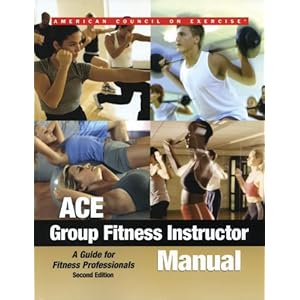
ACE Group Fitness Instructor Manual
NOTE: If you buy this book from the Amazon affiliates I've linked to, it will be much cheaper than buying it from ACE themselves.
This is a comprehensive guide to leading group fitness classes. Were you planning to teach an aerobics class, everything in this book would apply to your goals one hundred percent. Of course, you're not; you're planning to teach a dance class. It's still extremely helpful, but not everything in the book will really apply to your needs. (You probably don't need to know how to lead a class in freezing temperatures, for example.)
It's a large book, and not particularly fun or interesting to read, but it has a lot of very important information that you might not get anywhere else. Topics covered include the biology of exercise, how to lead a warm-up and cool-down, safe stretches for different kinds of exercise, and how to accommodate students with different health issues including pregnancy.
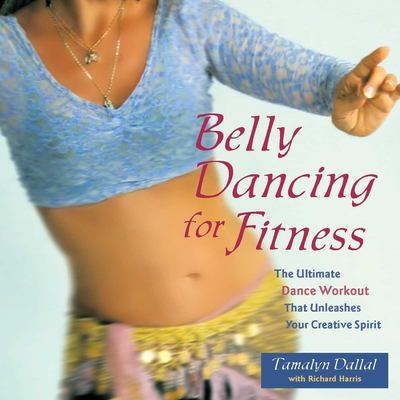
Belly Dancing for Fitness by Tamalyn Dallal
List Price: $14.95
This book is written and marketed as a self-instruction manual for students who want to learn bellydance at home. However, it would still be helpful for anyone who wants to teach beginner classes and is unsure where to start vis a vis lesson planning.

Relieve Stiffness and Feel Young Again with Undulation by Anita Boser
List Price: $24.95
This book is more than what it looks like. The first two chapters provide a fairly comprehensive framework for working with students who are out of shape or in chronic pain. Moreover, it includes a lot of wisdom about spinal alignment, learning to relax, and overcoming stiffness and mobility issues. The rest of the book is dedicated to a series of exercises that work well as light, enjoyable conditioning to help students increase their range of motion and warm up their bodies for class. It's easy to read and many of the exercises are illustrated.

Dynamic Alignment Through Imagery by Eric Franklin
List Price: $30.95
This book is almost the opposite of the ACE manual; it's a treasure trove of information about teaching dance, but not all of it applies to teaching bellydance. However, it's still extremely helpful, especially as a resource for teaching intermediate and advanced students. It's heavily illustrated and includes a ton of exercises to help students increase their body awareness and make their movements clearer and stronger through visualization techniques.
Together with lots of dance experience, these five books would provide a comprehensive basis for any new (or experienced) bellydance instructor.
While you're in research mode, don't neglect to learn about the history and culture of the dance form you're teaching. These two books are a great place to start:
Belly Dance: Orientalism, Transnationalism and Harem Fantasy by Anthony Shay and Barbara Sellers-Young
A Trade Like Any Other: Female Singers and Dancers in Egypt by Karin van Nieuwkerk
If you want to teach, but you're unsure about how to lead a safe warm-up, how to help students avoid injury, how to explain safe alignment, and other such concerns, these resources can help.
If you are a teacher, and you know of a helpful book, website or DVD I haven't included in this list, please let me know in the comments!
Anatomy of Movement by Blandine Calais-Germain
List Price: $29.99
If you are only going to buy one book about exercise science, consider this one. Its companion, Anatomy of Movement: Exercises, includes concrete ways to integrate the concepts into your classes.
This is a clear guide to human anatomy written in layman's terms and heavily illustrated. It's the most helpful book on anatomy I've ever read.
ACE Group Fitness Instructor Manual
NOTE: If you buy this book from the Amazon affiliates I've linked to, it will be much cheaper than buying it from ACE themselves.
This is a comprehensive guide to leading group fitness classes. Were you planning to teach an aerobics class, everything in this book would apply to your goals one hundred percent. Of course, you're not; you're planning to teach a dance class. It's still extremely helpful, but not everything in the book will really apply to your needs. (You probably don't need to know how to lead a class in freezing temperatures, for example.)
It's a large book, and not particularly fun or interesting to read, but it has a lot of very important information that you might not get anywhere else. Topics covered include the biology of exercise, how to lead a warm-up and cool-down, safe stretches for different kinds of exercise, and how to accommodate students with different health issues including pregnancy.
Belly Dancing for Fitness by Tamalyn Dallal
List Price: $14.95
This book is written and marketed as a self-instruction manual for students who want to learn bellydance at home. However, it would still be helpful for anyone who wants to teach beginner classes and is unsure where to start vis a vis lesson planning.
Relieve Stiffness and Feel Young Again with Undulation by Anita Boser
List Price: $24.95
This book is more than what it looks like. The first two chapters provide a fairly comprehensive framework for working with students who are out of shape or in chronic pain. Moreover, it includes a lot of wisdom about spinal alignment, learning to relax, and overcoming stiffness and mobility issues. The rest of the book is dedicated to a series of exercises that work well as light, enjoyable conditioning to help students increase their range of motion and warm up their bodies for class. It's easy to read and many of the exercises are illustrated.
Dynamic Alignment Through Imagery by Eric Franklin
List Price: $30.95
This book is almost the opposite of the ACE manual; it's a treasure trove of information about teaching dance, but not all of it applies to teaching bellydance. However, it's still extremely helpful, especially as a resource for teaching intermediate and advanced students. It's heavily illustrated and includes a ton of exercises to help students increase their body awareness and make their movements clearer and stronger through visualization techniques.
Together with lots of dance experience, these five books would provide a comprehensive basis for any new (or experienced) bellydance instructor.
While you're in research mode, don't neglect to learn about the history and culture of the dance form you're teaching. These two books are a great place to start:
Belly Dance: Orientalism, Transnationalism and Harem Fantasy by Anthony Shay and Barbara Sellers-Young
A Trade Like Any Other: Female Singers and Dancers in Egypt by Karin van Nieuwkerk
Wednesday, February 23, 2011
Teaching bellydance, part 1
I've been getting my thoughts together for some private lessons on teaching. I thought I'd post about it, since I'm trying to organize my mind over it anyway and the easiest way for me to do that is to write.
I've been teaching since 2004, which is not that long. I'm not the final authority on anything. Everything in this article is just my opinion, nothing more.
That being said, let's start at the beginning: making the decision to start teaching bellydance.
Good Reasons to Start Teaching
While there are a million other great reasons to teach, I think if you don't fit into at least two or three of the statements on this list, you might want to reconsider the idea of teaching, at least for now. Continue your training and continue growing as a dancer, then come back to the idea further on down the line.
Some good reasons to start teaching include:
- You have something unique to teach in your local market.
- You have the blessing of your own teacher.
- You have a good amount of experience being a teacher's assistant.
- You have a background in exercise science and/or you have experience teaching other forms of movement.
- You are genuinely excited about the idea of helping other people learn how to dance, even if that means they might take what you've taught them and do it better than you.
Bad Reasons to Start Teaching
There are just as many bad reasons to start teaching. Here are a few.
#1: To make money. Unless you are already well-known in your area and have a fan club of people that are dying to study under you, or you are in an area with no bellydance instructors where people are dying to study under anyone, you will most likely not make money off your classes at first. If you rent space for your classes, you'll probably start off making a loss. If you teach at a fitness center, you'll get paid, but most likely not much. $25/hour sounds pretty good until you realize as a new teacher you should be doing at least 2 hours of prep work outside of class for every class you teach. And you have to pay for gas. And fliers to promote your new classes. And a website. And et cetera. During lean months (August and December come to mind), even established teachers with a solid student base have trouble making money.
#2: To increase your cache in your community. If you have a dance community in your area, you will be competing against established teachers for students. If people don't already respect you as a dancer and a human being, this will not make them feel any better about you. It will not make them take you seriously. In fact, it may make them respect you less. ("Did you hear so-and-so started teaching? But she's only been taking classes for six months!")
#3: To bolster your sense of self-worth as a dancer. What happens when one of your students decides to switch over to someone else's classes (and they will)? Do you want to become one of those psycho bitches who gets all possessive? No. You don't. But if you don't have a strong sense of your own worth that isn't predicated on the number of students you have in any given session, you just might.
#4: Because you've learned all you can from your current teacher. Yeah, that seems like it should be reason enough, but it's really not. In fact, I believe that people who have only studied with one teacher have no business teaching, except to teach as that dancer's assistant. Why? Because without multiple points of reference, when you start teaching, you will be parroting what your teacher taught you. In essence, you'll be putting yourself on the market as a watered-down knockoff of your teacher.
If you've learned all you can from your current teacher, go take lessons with someone else. If there's no one in the area, look up your favorite workshop instructor (you have taken some workshops, haven't you?) and see if they'll do lessons over Skype.
What You Need to Start Teaching
It's a long list.
A lesson plan helps, but it's only a start.
You also need to be able to cultivate a warm, inviting, and respectful classroom atmosphere.
You need to know how to lead a safe warm-up and cool-down.
You need to know how to accommodate students with a history of chronic pain and/or injury.
You need to know how to explain safe posture AND how to recognize when students are in unsafe postures.
You need to be able to recognize when students are executing movements in a potentially harmful way.
You need to feel comfortable giving corrections to students regarding their posture or technique.
You need to be able to explain each movement you plan to teach at least two ways-- the way that makes the most sense to you, and an alternate way in case your students don't understand the first way. (Not everyone learns the same way, so the descriptions and metaphors that worked for you might not work for other people.)
You need to be able to gracefully acknowledge questions you can't answer. ("Well, I'm not sure, but let me get back to you about that next week.") In other words, don't make shit up just to look smart.
Similarly, you need to have the humility to acknowledge the things you aren't ready to teach. For example, I don't teach backbends, because I'm not sure that the way I execute my backbends is entirely safe.
Note how a lot of those requirements have to do with safety. Well, I'm obsessed with safety, partially because I've injured myself doing things that my teachers told me were safe. I never want that to be the experience my students have in my classes.
You may not really care whether or not your students get injured, but remember... people can sue.
It's Not All About You
Your classes should be about your students and your students' experience. Sounds great, right? Well, it is, mostly. The vast majority of bellydance students, just like the vast majority of people in general, are awesome.
And then there are some that are not.
Be prepared to handle the following:
-Occasional psychotic episodes from students; students who are inappropriately confrontational, either with their peers or with you.
-Students who ask questions constantly and, in essence, demand private lesson levels of attention during group classes.
-Students who are vastly more experienced than you showing up to your classes for reasons you can't surmise.
-Students who think they are vastly more experienced than you and attempt to correct or augment your instruction during class.
-Painfully shy students; students who seem totally disinterested; groups of friends who chatter with each other while you're trying to talk to the class.
-Students who take six weeks of classes with you and then try to teach. (Thankfully, this has yet to happen to me, but it's happened to some of my teachers!)
-Students who ask questions such as "How many classes do I need to take before I'll be a professional bellydancer?"
-Students who will do anything not to pay you; students who always have some excuse as to why they can't pay you today; students who steal class supplies such as hip scarves, either accidentally or on purpose.
-Students who talk shit about other students in the middle of class.
As much as it might seem lame and stupid, it helps to have print-outs of class rules and policies on hand at all times. Decide what you think acceptable behavior is for your classes and write it down, then give it to each new student as they arrive. It's much easier to say "you're in violation of the rules so I need to ask you to leave" than "you're acting like a psycho bitch so please go away".
The bottom line is, being a good teacher is hard. You can't ever be prepared for every eventuality, but you should do your best to prepare for things you know will happen.
Students will be self-conscious; you need to be friendly and draw them out of their shell.
Students will do things incorrectly; you need to be able to correct them without making them feel bad.
Students will ask questions you can't answer; when that happens, you need to be able to be humble and tell them "I don't know".
It might sound from what I've said that teaching is just a huge pain in the ass, but if you put the right kind of energy into it, it's extremely rewarding. Seeing your students grow into confident, body-aware, self-possessed dancers is magical. I always tear up when I see my students perform!
I will leave you on that happy note.
In Part 2 of this article, I plan to talk about resources for new teachers, and how to integrate what you're learning into what you're teaching.
In Part 3 of this article, I plan to talk about creating a niche for yourself, understanding the teacher you want to be, and identifying the kinds of students who will mesh with you as a teacher.
I've been teaching since 2004, which is not that long. I'm not the final authority on anything. Everything in this article is just my opinion, nothing more.
That being said, let's start at the beginning: making the decision to start teaching bellydance.
Good Reasons to Start Teaching
While there are a million other great reasons to teach, I think if you don't fit into at least two or three of the statements on this list, you might want to reconsider the idea of teaching, at least for now. Continue your training and continue growing as a dancer, then come back to the idea further on down the line.
Some good reasons to start teaching include:
- You have something unique to teach in your local market.
- You have the blessing of your own teacher.
- You have a good amount of experience being a teacher's assistant.
- You have a background in exercise science and/or you have experience teaching other forms of movement.
- You are genuinely excited about the idea of helping other people learn how to dance, even if that means they might take what you've taught them and do it better than you.
Bad Reasons to Start Teaching
There are just as many bad reasons to start teaching. Here are a few.
#1: To make money. Unless you are already well-known in your area and have a fan club of people that are dying to study under you, or you are in an area with no bellydance instructors where people are dying to study under anyone, you will most likely not make money off your classes at first. If you rent space for your classes, you'll probably start off making a loss. If you teach at a fitness center, you'll get paid, but most likely not much. $25/hour sounds pretty good until you realize as a new teacher you should be doing at least 2 hours of prep work outside of class for every class you teach. And you have to pay for gas. And fliers to promote your new classes. And a website. And et cetera. During lean months (August and December come to mind), even established teachers with a solid student base have trouble making money.
#2: To increase your cache in your community. If you have a dance community in your area, you will be competing against established teachers for students. If people don't already respect you as a dancer and a human being, this will not make them feel any better about you. It will not make them take you seriously. In fact, it may make them respect you less. ("Did you hear so-and-so started teaching? But she's only been taking classes for six months!")
#3: To bolster your sense of self-worth as a dancer. What happens when one of your students decides to switch over to someone else's classes (and they will)? Do you want to become one of those psycho bitches who gets all possessive? No. You don't. But if you don't have a strong sense of your own worth that isn't predicated on the number of students you have in any given session, you just might.
#4: Because you've learned all you can from your current teacher. Yeah, that seems like it should be reason enough, but it's really not. In fact, I believe that people who have only studied with one teacher have no business teaching, except to teach as that dancer's assistant. Why? Because without multiple points of reference, when you start teaching, you will be parroting what your teacher taught you. In essence, you'll be putting yourself on the market as a watered-down knockoff of your teacher.
If you've learned all you can from your current teacher, go take lessons with someone else. If there's no one in the area, look up your favorite workshop instructor (you have taken some workshops, haven't you?) and see if they'll do lessons over Skype.
What You Need to Start Teaching
It's a long list.
A lesson plan helps, but it's only a start.
You also need to be able to cultivate a warm, inviting, and respectful classroom atmosphere.
You need to know how to lead a safe warm-up and cool-down.
You need to know how to accommodate students with a history of chronic pain and/or injury.
You need to know how to explain safe posture AND how to recognize when students are in unsafe postures.
You need to be able to recognize when students are executing movements in a potentially harmful way.
You need to feel comfortable giving corrections to students regarding their posture or technique.
You need to be able to explain each movement you plan to teach at least two ways-- the way that makes the most sense to you, and an alternate way in case your students don't understand the first way. (Not everyone learns the same way, so the descriptions and metaphors that worked for you might not work for other people.)
You need to be able to gracefully acknowledge questions you can't answer. ("Well, I'm not sure, but let me get back to you about that next week.") In other words, don't make shit up just to look smart.
Similarly, you need to have the humility to acknowledge the things you aren't ready to teach. For example, I don't teach backbends, because I'm not sure that the way I execute my backbends is entirely safe.
Note how a lot of those requirements have to do with safety. Well, I'm obsessed with safety, partially because I've injured myself doing things that my teachers told me were safe. I never want that to be the experience my students have in my classes.
You may not really care whether or not your students get injured, but remember... people can sue.
It's Not All About You
Your classes should be about your students and your students' experience. Sounds great, right? Well, it is, mostly. The vast majority of bellydance students, just like the vast majority of people in general, are awesome.
And then there are some that are not.
Be prepared to handle the following:
-Occasional psychotic episodes from students; students who are inappropriately confrontational, either with their peers or with you.
-Students who ask questions constantly and, in essence, demand private lesson levels of attention during group classes.
-Students who are vastly more experienced than you showing up to your classes for reasons you can't surmise.
-Students who think they are vastly more experienced than you and attempt to correct or augment your instruction during class.
-Painfully shy students; students who seem totally disinterested; groups of friends who chatter with each other while you're trying to talk to the class.
-Students who take six weeks of classes with you and then try to teach. (Thankfully, this has yet to happen to me, but it's happened to some of my teachers!)
-Students who ask questions such as "How many classes do I need to take before I'll be a professional bellydancer?"
-Students who will do anything not to pay you; students who always have some excuse as to why they can't pay you today; students who steal class supplies such as hip scarves, either accidentally or on purpose.
-Students who talk shit about other students in the middle of class.
As much as it might seem lame and stupid, it helps to have print-outs of class rules and policies on hand at all times. Decide what you think acceptable behavior is for your classes and write it down, then give it to each new student as they arrive. It's much easier to say "you're in violation of the rules so I need to ask you to leave" than "you're acting like a psycho bitch so please go away".
The bottom line is, being a good teacher is hard. You can't ever be prepared for every eventuality, but you should do your best to prepare for things you know will happen.
Students will be self-conscious; you need to be friendly and draw them out of their shell.
Students will do things incorrectly; you need to be able to correct them without making them feel bad.
Students will ask questions you can't answer; when that happens, you need to be able to be humble and tell them "I don't know".
It might sound from what I've said that teaching is just a huge pain in the ass, but if you put the right kind of energy into it, it's extremely rewarding. Seeing your students grow into confident, body-aware, self-possessed dancers is magical. I always tear up when I see my students perform!
I will leave you on that happy note.
In Part 2 of this article, I plan to talk about resources for new teachers, and how to integrate what you're learning into what you're teaching.
In Part 3 of this article, I plan to talk about creating a niche for yourself, understanding the teacher you want to be, and identifying the kinds of students who will mesh with you as a teacher.
Tuesday, January 18, 2011
Accepting feedback
Feedback! It's not a four-letter word, but it is a compound word made of two four-letter words. Many people find it terrifying; others are junkies for it; yet others ignore it whenever possible. However you feel about feedback, you can't avoid it forever. It's not something that happens only to artists-- if you do anything, anything at all, ever, among other people, you are at risk for feedback.
Of course, feedback about creative work is usually scarier than feedback about things like spelling or one's ironing technique. Unless you are working in a vacuum, however, you need to prepare yourself to accept what people have to say about your art, or your dance, or your writing, or your avant-garde performance pieces. Or whatever. People will tell you what they think whether or not you ask them to. They're so helpful that way!
Unfortunately, taking a tidbit of input from another human being the wrong way (i.e. taking it too seriously) can seriously derail your creative process. A glowing review can give you an unwarranted sense of self-importance, while a snide comment can make you feel despondent and worthless. If you take everything you hear to heart, and you get mixed reviews (most of us do), you will end up in crazytown, too conflicted about the merit of your own work to actually work.
As you can imagine, this doesn't work!
Here is what I have learned from years and years of getting constructive criticism about my artwork, my designs, my dancing, and my writing about accepting feedback without losing it-- 'it' being my sense of self and direction.
I hope it works for you.
Part One. In Public with the General Public.
Accepting Hyperbolic Compliments that Glow with Radioactive Brilliance
e.g. "You're a better dancer than Rachel Brice!"
Step 1: "Wow, thank you so much! I'm so flattered that you feel that way!"
Step 2: Forget the compliment. Do not, under any circumstances, let yourself buy into anything you know is totally overblown. There is a 99.insane number of 9's percent chance that you are not actually a better dancer than Rachel Brice, or Bozenka, or whoever, and you know it. (And if you are, you need to get some better PR, because I should have heard of you by now.)
Accepting Enthusiastic Praise
e.g. "I absolutely adored your dance! It made me tear up a little!"
Step 1: "Thank you so much! I'm so glad you enjoyed it!"
Step 2: Tell them a little bit about your motivation for the piece so that you can connect over something.
Step 3: Enjoy the shared connection. You made someone's life a little better. This was probably one of your goals in doing whatever it was you were doing, so you're entitled to be proud of yourself.
Step 4: Remember that you can always do better.
DO NOT at any point try to belittle anyone's praise. Don't go "oh, no, I'm not really very good" or whatever. This does not make you seem gracious, it makes you seem like you're fishing, or like you don't give that person's perspective any credence. For some people this is a knee jerk reaction-- if that's true of you, you need to catch yourself doing it, try to stop, and ask yourself why you feel like you need to apologize for doing a good job.
Accepting Mild Praise
e.g. "Good job tonight!"
Step 1: "Thank you!"
Step 2: Interpret. This could mean one of two things.
Some people give everyone in a show compliments as a matter of course-- for these people, saying "Good job!" is the same as saying "I watched your dance!" That doesn't mean you shouldn't be gracious towards them; they're trying to be polite and that's not a bad thing. Other people will really only say anything if they actually enjoyed what you did. (I fall into the latter camp because I'm actually sort of socially nervous.)
Step 3: In any case, they probably didn't hate it, so whatever.
Should you counter-compliment?
In my opinion, only if you mean it.
Accepting Things You're Not Sure Are Actually Compliments
e.g. "Wow, that was really different!"
Step 1: Treat it as a compliment. "Thanks!"
Step 2: Take this as an opportunity to discuss the background of the piece-- maybe your motivation for doing it, or the history of the style, or whatever.
Step 3: Observe. The person you're speaking with may find this fascinating, confusing, or repulsive, or they may not care. What does their reaction tell you about your audience?
DO NOT make excuses for your work. Don't dwell on your mistakes when talking to people! (I'm a total hypocrite. I do this all the time.) Half the time, your audience will not have noticed the things you're so upset about. If you bring it up to them, their impression of your work will be colored.
Accepting Condolences
e.g. "It's such a shame that your top fell off during your performance!"
Step 1: "Yeah, I know! Well, there's always next time!"
Step 2: What else are you going to say?
Accepting Unsolicited Criticism
e.g. "I liked your dance, but I didn't think that the costume was appropriate for your choice of music."
Step 1: Evaluate.
If this is a known problem, something you're working on fixing or something you can't fix for some reason, nod your head and agree.
If not, here is a stock response: "I hadn't thought about that. Thank you."
Step 2: Evaluate some more. Can you use the advice? Do you agree? Even if you respect the source, don't just take what they say to heart automatically, but don't reject it out of hand either. Think about it and form your own opinion.
Step 3: Do not yell or cry or walk away. Don't make excuses or argue with them. You don't have to be grateful for what this person said, but you should at least try to be gracious.
Step 4: If you genuinely don't understand the criticism or why it was given, you have the right to ask. "Why do you feel that way?"
Accepting Jabs, Cuts and other Meanness
e.g. "I really hate that song."
Step 1: Evaluate.
If there might be any merit to the comment whatsoever, say "Thank you for the feedback."
If the comment is baseless, or delivered in a mean-spirited manner, assert yourself without being a jerk. "Well, thanks for the feedback, but I have to disagree."
Step 2: Refer to the above steps for Unsolicited Criticism.
Accepting Silence
I haven't figured this one out yet.
Part Two. In Class and Among Peers - Accepting Formal Critiques
Sometimes you will be specifically looking for criticism-- or, in any case, you will know to expect it for some reason, even if you don't really want it. Here are some tips for that particular kind of situation.
DO:
assume that everyone has your best interests at heart until and unless they give you good evidence to the contrary.
keep a constant balance between open-mindedness and skepticism.
remember that just because someone says something doesn't make it true.
remember that just because you don't immediately agree with someone, it doesn't make them wrong.
make notes of what resonates with you and do your best to integrate it.
remember that your work is not you-- your self-worth should not be based in the worth of your work.
ask questions if you don't understand what someone has said.
ask for specific kinds of feedback you know you need.
maintain a sense of humor.
DO NOT:
make excuses for your weaknesses (or your strengths).
explain why things had to be the way you made them.
get defensive or angry.
feel discouraged if you get a lot of change-oriented feedback.
A few final thoughts.
Serious artists want feedback-- or, at very least, they know they need it, because no one can be objective about their own work.
The good news is, with practice, it gets easier to accept both compliments and criticism.
No one's advice is impeccable, nor is anyone's advice totally worthless.
Your job as the artist is to be responsible for your reaction to criticism. Don't let your critics (or your hangers-on) steer your actions, but don't tune everyone out, either. Let the input of others inform what you do without dictating your development.
And no excuses.
Of course, feedback about creative work is usually scarier than feedback about things like spelling or one's ironing technique. Unless you are working in a vacuum, however, you need to prepare yourself to accept what people have to say about your art, or your dance, or your writing, or your avant-garde performance pieces. Or whatever. People will tell you what they think whether or not you ask them to. They're so helpful that way!
Unfortunately, taking a tidbit of input from another human being the wrong way (i.e. taking it too seriously) can seriously derail your creative process. A glowing review can give you an unwarranted sense of self-importance, while a snide comment can make you feel despondent and worthless. If you take everything you hear to heart, and you get mixed reviews (most of us do), you will end up in crazytown, too conflicted about the merit of your own work to actually work.
As you can imagine, this doesn't work!
Here is what I have learned from years and years of getting constructive criticism about my artwork, my designs, my dancing, and my writing about accepting feedback without losing it-- 'it' being my sense of self and direction.
I hope it works for you.
Part One. In Public with the General Public.
Accepting Hyperbolic Compliments that Glow with Radioactive Brilliance
e.g. "You're a better dancer than Rachel Brice!"
Step 1: "Wow, thank you so much! I'm so flattered that you feel that way!"
Step 2: Forget the compliment. Do not, under any circumstances, let yourself buy into anything you know is totally overblown. There is a 99.insane number of 9's percent chance that you are not actually a better dancer than Rachel Brice, or Bozenka, or whoever, and you know it. (And if you are, you need to get some better PR, because I should have heard of you by now.)
Accepting Enthusiastic Praise
e.g. "I absolutely adored your dance! It made me tear up a little!"
Step 1: "Thank you so much! I'm so glad you enjoyed it!"
Step 2: Tell them a little bit about your motivation for the piece so that you can connect over something.
Step 3: Enjoy the shared connection. You made someone's life a little better. This was probably one of your goals in doing whatever it was you were doing, so you're entitled to be proud of yourself.
Step 4: Remember that you can always do better.
DO NOT at any point try to belittle anyone's praise. Don't go "oh, no, I'm not really very good" or whatever. This does not make you seem gracious, it makes you seem like you're fishing, or like you don't give that person's perspective any credence. For some people this is a knee jerk reaction-- if that's true of you, you need to catch yourself doing it, try to stop, and ask yourself why you feel like you need to apologize for doing a good job.
Accepting Mild Praise
e.g. "Good job tonight!"
Step 1: "Thank you!"
Step 2: Interpret. This could mean one of two things.
Some people give everyone in a show compliments as a matter of course-- for these people, saying "Good job!" is the same as saying "I watched your dance!" That doesn't mean you shouldn't be gracious towards them; they're trying to be polite and that's not a bad thing. Other people will really only say anything if they actually enjoyed what you did. (I fall into the latter camp because I'm actually sort of socially nervous.)
Step 3: In any case, they probably didn't hate it, so whatever.
Should you counter-compliment?
In my opinion, only if you mean it.
Accepting Things You're Not Sure Are Actually Compliments
e.g. "Wow, that was really different!"
Step 1: Treat it as a compliment. "Thanks!"
Step 2: Take this as an opportunity to discuss the background of the piece-- maybe your motivation for doing it, or the history of the style, or whatever.
Step 3: Observe. The person you're speaking with may find this fascinating, confusing, or repulsive, or they may not care. What does their reaction tell you about your audience?
DO NOT make excuses for your work. Don't dwell on your mistakes when talking to people! (I'm a total hypocrite. I do this all the time.) Half the time, your audience will not have noticed the things you're so upset about. If you bring it up to them, their impression of your work will be colored.
Accepting Condolences
e.g. "It's such a shame that your top fell off during your performance!"
Step 1: "Yeah, I know! Well, there's always next time!"
Step 2: What else are you going to say?
Accepting Unsolicited Criticism
e.g. "I liked your dance, but I didn't think that the costume was appropriate for your choice of music."
Step 1: Evaluate.
If this is a known problem, something you're working on fixing or something you can't fix for some reason, nod your head and agree.
If not, here is a stock response: "I hadn't thought about that. Thank you."
Step 2: Evaluate some more. Can you use the advice? Do you agree? Even if you respect the source, don't just take what they say to heart automatically, but don't reject it out of hand either. Think about it and form your own opinion.
Step 3: Do not yell or cry or walk away. Don't make excuses or argue with them. You don't have to be grateful for what this person said, but you should at least try to be gracious.
Step 4: If you genuinely don't understand the criticism or why it was given, you have the right to ask. "Why do you feel that way?"
Accepting Jabs, Cuts and other Meanness
e.g. "I really hate that song."
Step 1: Evaluate.
If there might be any merit to the comment whatsoever, say "Thank you for the feedback."
If the comment is baseless, or delivered in a mean-spirited manner, assert yourself without being a jerk. "Well, thanks for the feedback, but I have to disagree."
Step 2: Refer to the above steps for Unsolicited Criticism.
Accepting Silence
I haven't figured this one out yet.
Part Two. In Class and Among Peers - Accepting Formal Critiques
Sometimes you will be specifically looking for criticism-- or, in any case, you will know to expect it for some reason, even if you don't really want it. Here are some tips for that particular kind of situation.
DO:
assume that everyone has your best interests at heart until and unless they give you good evidence to the contrary.
keep a constant balance between open-mindedness and skepticism.
remember that just because someone says something doesn't make it true.
remember that just because you don't immediately agree with someone, it doesn't make them wrong.
make notes of what resonates with you and do your best to integrate it.
remember that your work is not you-- your self-worth should not be based in the worth of your work.
ask questions if you don't understand what someone has said.
ask for specific kinds of feedback you know you need.
maintain a sense of humor.
DO NOT:
make excuses for your weaknesses (or your strengths).
explain why things had to be the way you made them.
get defensive or angry.
feel discouraged if you get a lot of change-oriented feedback.
A few final thoughts.
Serious artists want feedback-- or, at very least, they know they need it, because no one can be objective about their own work.
The good news is, with practice, it gets easier to accept both compliments and criticism.
No one's advice is impeccable, nor is anyone's advice totally worthless.
Your job as the artist is to be responsible for your reaction to criticism. Don't let your critics (or your hangers-on) steer your actions, but don't tune everyone out, either. Let the input of others inform what you do without dictating your development.
And no excuses.
Thursday, January 6, 2011
The aftermath of giving up

I was just looking through my old morning pages journal for 2009 to find material for my upcoming FLOW class when I came along this entry, dated August 19- four days after my twenty-fifth birthday. It's pretty amusing. Here it is, unedited.
I'm super jazzed because I just drank a ton of coffee. I guess this week I'm supposed to explore my childhood experiences with creativity. (This was an assignment from The Artist's Way by Julia Cameron.)
I remember when I was three, one day I was finger painting and it made me think I wanted to be a fashion designer. I'm not sure how I thought the two were connected, but the thought just occurred to me. (I think I had the idea that I could create patterns for fabric prints via fingerpainting.)
Later, when I was in the second grade or so, I remember we did a project in Art class where we created our own versions of famous paintings. I did a version of the Mona Lisa. It didn't really occur to me to think of it as special, but when the art teacher put all of our drawings out to hang in the hall, all of my friends commented on how good my drawing was. I felt very proud of that. That was the first time I really thought I had any talent for visual art.
For a very long time, all through elementary school and much of middle school, I focused on becoming a creative writer and a musician (playing the viola). Those were the things I thought I was really good at. I know I did dance classes as well but I don't think I thought of them as being a vehicle for creative expression-- I viewed them more as a sport instead.
Writing was probably the most important thing to me back then. I really wanted to become a novelist. In high school, both music and writing totally fell by the wayside as I began to focus more energy on drawing and painting. I don't think I ever made the choice consciously to stop writing, but I did actively decide to stop playing viola.
Now I feel like I probably have little to no facility as a musician or writer, and whatever skill I had in drawing and painting is quickly diminishing. Honestly I dread the thought of attempting to pick any of these pursuits up again. I feel like it would be mostly a waste of time because I think that my growth potential in these areas is really limited.
I guess I am not interested in the idea of continually producing mediocre work and never improving. To be fair, it's not like I have ever made any genuine attempt to improve my writing, so my idea that that pursuit would be futile is largely baseless.
I must admit that it is far more appealing for me to work on dance, where I can really see myself improving and I don't feel so stuck or limited.
I'm not as afraid of mediocrity as I am of stagnation.
This feeling of stagnation and continual mediocrity was the reason I stopped drawing on a regular basis. Despite consistent effort and practice, I never felt I was improving. Over time I grew more and more focused on the technical aspect of drawing-- to be specific, the accurate representation of human anatomy in figure drawing-- and less and less satisfied with my abilities as a technician. Eventually I became so discouraged with my lack of aptitude that I gave up the pursuit. I was twenty-ish when I made that decision.
I have tried several times to start drawing again, because I've started to really miss it, and I feel inspired by different things now as I was then. Unfortunately, drawing makes my neck injury flare up, just as most other crafts do at this point. I can't do it much at all any more.
Pain was the main reason I stopped playing viola as well.
Pain, sickness, frustration, self-doubt and feelings of total failure were all major factors that led me to start writing again. When I started down that path last April, I felt that my health issues were closing off all of my other creative options, including dance, or at least my dream of being a dance professional. Fumbling around in that bleak atmosphere for something creative I could do that wouldn't hurt, I happened upon writing, and by extension, the book.
It's painful to give up. Letting go of something you love is heartbreaking and often terrifying.
However, I believe that in certain situations, it can also be the only way to overcome creative and emotional blocks.
Here's another journal entry, from August 9, 2009.
Prior to finding dance I had spent the last few years feeling incompetent, unaccomplished and unworthy of attention for many years. However, as a small child, I always felt like I was special, talented, and worthy of the recognition of others. For years, as an adolescent, I missed that feeling terribly. Somehow I felt both responsible for its loss, figuring my general slacker attitude was to blame, but also helpless to change due to my inability to cope with my chronic disease, fibromyalgia. I worked hard to become a competent and respected artist, but I never felt like I accomplished that goal.
...Looking back, I remember that I was actually being praised and rewarded and even paid for my artwork, but it didn't seem to matter. Because I was constantly frustrated by my own lack of progress, I never took any of this recognition seriously. I didn't feel good about my work even when other people liked it.
And another, from August 12:
I feel like as long as I keep dancing, I'll still be the same person I am now at my core. I'm afraid that without that anchor I will start to wither emotionally. I am not even talking only about this happening at the twilight of my life-- I'm scared it could happen now if I let it. I think the thing is, at this point I feel like this is my life's work. Were I to stop I would feel like I was giving up and abandoning something crucial to my self.
...I don't know why my emotional attachment to this dance runs so deep. I guess part of it is that I feel like it's the only reason I'm not still totally crippled by my fibromyalgia. But I also know that I have always longed to be really good at something. I'll always feel like that moment is on the horizon with dance, and it's wonderful to always have that to hope for.
...I think my real goal is just to keep trying forever. To never let myself get comfortable or complacent. To always keep pushing myself to do more and do better.
And yet another, from August 13:
Why am I so afraid of giving up?
It makes me feel like a loser. I have the idea in my head that if I give up, I'll never accomplish anything important, thus be a loser. Also, I tend to feel like giving up negates the value of what you've accomplished in the past because the future potential is wasted. Wasted potential is one of the things I fear most.
I know you can't go through life without making decisions which prohibit you from achieving your potential in a certain area, and I accept that to some extent, although that idea still makes me a little upset.
...I think I've felt since I was young that I really could do anything as long as I really tried. This is almost certainly untrue, but I probably hold it as fact anyway. Thus, when I fail, I feel it is an indication not of my lack of ability but rather of my shortcomings as a human being.
So right now some of you are probably thinking "wow, she needs therapy", while others probably see themselves reflected in these words. My point in posting this stuff is not to elicit sympathy, but rather to demonstrate something no one ever told me when I got into the business of doing art, and that is: sometimes it makes sense to give up.
It's hard to know where to get your sense of self-worth from. Some people base it on their social lives, some base it on their work performance, some on their appearance or their participation in an organization or group.
Most of the artists I know tend to base it on their work-- and often, by extension, the commercial success or failure of their work, or the critical feedback they receive about their work, or both.
By last year I had learned that people are fickle and so is the market; you can't use either as an accurate barometer of the value of your work. So, instead, I had decided to associate my self-worth with how much I was progressing as a dancer, and by extension how hard I was working to progress.
The result was not fun, and it was not a good mental working environment. It was impossible for me to fully enjoy working with so much riding on the results. The pathways to creativity were blocked with too much baggage.
The spectre of my physical limitations loomed over everything I did. Instead of being mature about handling my limitiations, respecting my body and avoiding things that caused pain, I pushed myself as hard as I could in an effort to prove that I could overcome (or ignore) my chronic illness.
I'd devised a battle in my head, with me and my dance on one side and the fibromyalgia on the other.
The fibromyalgia won.
I don't imagine that your creative struggles are the same as mine, but still, most of us are at war with ourselves over something, placing one part of ourselves on the side of Good and the other part on the side of Evil. Some of these fights are worthwhile and reasonable (i.e. struggling against addiction) but many, like mine was, are pointless and self-defeating.
Here is my advice for self-flagellating artists like myself:
Give up.
More work is not better work.
There is nothing sacred about working yourself to death.
Your work is not you; your worth is not the worth of your work. You're worth infinitely more than anything you could ever accomplish or produce.
The things you hate about yourself could be fuel for your creative efforts if you learn how to work with them rather than against them.
None of us can do everything. We can't even do everything we're good at.
Don't be afraid to stop doing something, even creative work, when it stops making sense. The work will still be there; time doesn't diminish it.
Get used to asking yourself what makes sense for you and what doesn't; what you need and what you don't.
Look inside and figure out what you need to do and then do that-- and only that. Anything more will just get in the way.
Love yourself for who you'd be if you had to stop working tomorrow.
Saturday, January 1, 2011
What am I doing and why?
I've been thinking a lot lately (not unusual) about the dire and sweeping problems humanity faces (also not unusual) and wondering how tiny individuals like myself fit in to times like these (all right, so, full disclosure, this is really something I've done all the time for a while. It's not a new thing at all). Within the larger questions I have about life lie many smaller ones, stacked like fractal nesting dolls.
One I've been stuck on lately is:
what am I doing with my life and why?
I know what I want to do for myself. I want to be paid to write novels (a dream) and also to teach the stuff I already do-- ESL and dance (a reality). But when I look at the rest of the world, at those dire and sweeping problems-- climate change, the growing divide between rich and poor, our disintegrating global economy, the increasingly insane political climate of the United States, not to mention all of the other senseless acts of violence that we humans commit towards one another and our world on a daily basis-- what I want often seems petty and selfish.
I vacillate between feeling
1. that my ambitions are not actually selfish-- they may amount to positive change in the long run and it will all be okay;
2. that it doesn't matter that my ambitions are selfish because I have no idea how I would change anything anyway;
and
3. that I am a self-centered asshole.
I can't seem to console myself with the idea that I am an artist and therefore my work is important. It's not because I don't think of myself as an artist; I have learned to think of myself as one without feeling self-conscious pangs of anxiety. However, I don't believe that art is inherently worthy of our time and energy, nor that art is always a force for good. Art can be a vehicle for pretty much anything, for blessings and for curses, as well as for pretty much nothing at all.
I know I can dance until my spine collapses and my toes fall off and it will do just about nothing to fight the problems I've just enumerated.
What am I doing and why?
I have some mildly convincing arguments which, at times, me feel kind of better about my life choices. Here are some of them.
#1
One of the problems that I have with American culture is our rabid and insatiable desire for more stuff. If nothing else, what I am selling (experiences) doesn't take up any space, and won't hang out in a landfill once you're done with it.
#2
I am empowering people to find meaning in their lives outside of the relentless pursuit of more crap. We are all capable of producing our own beauty; we don't always need to purchase it at a store.
#3
I hope I am helping to undo some of the damage that the mass media has wrought on the minds of the women that I teach in regards to self-worth and self-image, without making glamour into a dirty concept (glamour being one of the things I hold sacred).
#4
I know that the artistic work of others has added more to my life than I can possibly understand. I'm not sure I would want to be alive were it not for the work of some of my favorite artists. I don't flatter myself to think that I am what keeps people going, but who knows? I might at least make life more enjoyable for a few people, to make some of us feel a little less alone in the world.
#5
Who am I kidding? I can't stop. I've tried to "grow up" and be a normal cog in productive society, and it sucked. Art is probably the only thing I'm good at, and without it I will shrivel up into a husk of a person.
#6
There is a glittering mirage I can see far, far in the distance-- a beautiful dream, a vision of having influence. Perhaps at some point, I will have conned enough people into listening to me at once, into taking me seriously, and I will be able to force them to do my bidding, and we will start a zero-impact commune in the mountains somewhere-- wait no this is sounding like a cult.
Never mind that last one for now.
I'm not going to change course. I'll keep working, and I'll keep feeling conflicted. I'll probably still feel conflicted on my deathbed, looking back at my life and wondering if I made the right decisions, if I maximized my potential, if I made any lasting difference in the world.
I'm sure that many people would tell me to stop thinking so hard, to stop feeling so guilty, to let things go and let bygones be bygones or whatever. But it seems like I'm made to ruminate just as much as I'm made for anything else. From my perspective, it feels right and sane to ask myself these questions, and to hold on to my questions more dearly than I do to my beliefs about the world or my place therein.
One I've been stuck on lately is:
what am I doing with my life and why?
I know what I want to do for myself. I want to be paid to write novels (a dream) and also to teach the stuff I already do-- ESL and dance (a reality). But when I look at the rest of the world, at those dire and sweeping problems-- climate change, the growing divide between rich and poor, our disintegrating global economy, the increasingly insane political climate of the United States, not to mention all of the other senseless acts of violence that we humans commit towards one another and our world on a daily basis-- what I want often seems petty and selfish.
I vacillate between feeling
1. that my ambitions are not actually selfish-- they may amount to positive change in the long run and it will all be okay;
2. that it doesn't matter that my ambitions are selfish because I have no idea how I would change anything anyway;
and
3. that I am a self-centered asshole.
I can't seem to console myself with the idea that I am an artist and therefore my work is important. It's not because I don't think of myself as an artist; I have learned to think of myself as one without feeling self-conscious pangs of anxiety. However, I don't believe that art is inherently worthy of our time and energy, nor that art is always a force for good. Art can be a vehicle for pretty much anything, for blessings and for curses, as well as for pretty much nothing at all.
I know I can dance until my spine collapses and my toes fall off and it will do just about nothing to fight the problems I've just enumerated.
What am I doing and why?
I have some mildly convincing arguments which, at times, me feel kind of better about my life choices. Here are some of them.
#1
One of the problems that I have with American culture is our rabid and insatiable desire for more stuff. If nothing else, what I am selling (experiences) doesn't take up any space, and won't hang out in a landfill once you're done with it.
#2
I am empowering people to find meaning in their lives outside of the relentless pursuit of more crap. We are all capable of producing our own beauty; we don't always need to purchase it at a store.
#3
I hope I am helping to undo some of the damage that the mass media has wrought on the minds of the women that I teach in regards to self-worth and self-image, without making glamour into a dirty concept (glamour being one of the things I hold sacred).
#4
I know that the artistic work of others has added more to my life than I can possibly understand. I'm not sure I would want to be alive were it not for the work of some of my favorite artists. I don't flatter myself to think that I am what keeps people going, but who knows? I might at least make life more enjoyable for a few people, to make some of us feel a little less alone in the world.
#5
Who am I kidding? I can't stop. I've tried to "grow up" and be a normal cog in productive society, and it sucked. Art is probably the only thing I'm good at, and without it I will shrivel up into a husk of a person.
#6
There is a glittering mirage I can see far, far in the distance-- a beautiful dream, a vision of having influence. Perhaps at some point, I will have conned enough people into listening to me at once, into taking me seriously, and I will be able to force them to do my bidding, and we will start a zero-impact commune in the mountains somewhere-- wait no this is sounding like a cult.
Never mind that last one for now.
I'm not going to change course. I'll keep working, and I'll keep feeling conflicted. I'll probably still feel conflicted on my deathbed, looking back at my life and wondering if I made the right decisions, if I maximized my potential, if I made any lasting difference in the world.
I'm sure that many people would tell me to stop thinking so hard, to stop feeling so guilty, to let things go and let bygones be bygones or whatever. But it seems like I'm made to ruminate just as much as I'm made for anything else. From my perspective, it feels right and sane to ask myself these questions, and to hold on to my questions more dearly than I do to my beliefs about the world or my place therein.
Tuesday, October 26, 2010
Art and Cheese
It is not a secret that many of the things that I love with a love from my deepest heart are kind of cheesy. Slightly hokey. Perhaps not to be taken totally seriously.
Let me enumerate with some examples, some of my very very favorite things in the world:
-Dragons.
-Also, dungeons.
-The combination thereof.
-Bellydance. (I understand that many of you may not find it cheesy, but I think it's hard to argue that it doesn't at least have the potential to be cheesy.)
-(some) Anime and manga and (some) American animation and comic books.
-Vampires.
-Metal.
-80's pop music.
-Drag queens.
-Science fiction.
I could continue, but I think the point is clear. I love cheese.
Now let's be clear, while I love cheesy things, I don't love them because they are cheesy; I love them because I love them, regardless of their hokeyness. After all, I don't love all kinds of cheese. No-- I have the refined palate of someone who has been a cheese enthusiast for many years. Sub-par cheese is quite offensive to me.
While I love all of these things without taking them too seriously, I don't love them to be ironic. My love for them is genuine and pure-- perhaps purer than it might be if I did consider them to be Serious Business, since I can evaluate them frankly and look past their flaws. My adoration absolutely does not contain the taint of mockery. I think there's something a little cruel in being an ironic fan of something, to be honest. Doesn't that trivialize the sincere enjoyment of true fans?
After all, why should we judge each other-- or judge ourselves-- for what we like? Why should we feel we need to apologize for where we find relief from the drudgery of everyday life? I think we shouldn't. It makes me truly happy to recognize genuine interest in passion in other people, even if it's for things I can't really stand (such as football, Dave Matthews Band, or Naruto). I'd much rather be friends with someone who genuinely likes stuff I don't care for, even stuff I kind of hate, than someone who is bored with everything and pursues things only with an edge of irony, a detachment to protect their personal coolness quotient or whatever.
However...
As much as I love cheese, sometimes it's hard to work exclusively in fields I know are cheesy.
As you might know, I am a bellydancer. I take my dance training and my role as a responsible, ethical member of the professional bellydance community seriously. I take my work seriously too, to an extent. I practice and I try to produce the most genuinely enjoyable performances that I can, performances that will engage bellydancers and the general public alike.
However, it's difficult for me to escape the fact that I get up on stage in nearly as much makeup as a drag queen wearing a revealing costume and perform in a style that represents a fantasy of an Orient that never exactly existed. In the end, it's kind of not serious. It might be emotionally affecting at times, but more often it's just fun, sexy, and cheesy entertainment.
There is nothing wrong with that, not until you start asking to be taken seriously. Here's the thing-- I don't really take myself seriously, but I sure as hell want other people to respect me for what I do.
How do I make that happen?
I'm also in the process of writing a novel. Well, to be more accurate, it's written, and I'm in the process of editing it a million times. This novel is about vampires. Because that's what the world needs-- another vampire book. What can I say? They say to write about what you love, and OMG I LOVE VAMPIRES. Can I help it that I don't really have any interest in writing serious literary fiction?
I need to take this endeavor seriously, because I want my book to be the best it can be, but I can't take it too seriously-- or I will step back from myself, forget my genuine love for the undead, and think Oh My God What Am I Doing, I Am Writing A Book About Vampires.
The book comes up in conversation from time to time. It usually sounds something like this:
"What have you been up to lately, Sara?"
"Well, I just finished writing the first draft of my first novel."
"Oh, wow! What's it about?"
"Well... you know... .... ... *coughhackvampires*."
And then I change the subject.
Once I finish working on it, I am going to need to try to con someone into publishing it for me. I am worried that my cheese-related shame will be an impediment. How can I sell something I'm embarrassed to even talk about?
I can only think of two solutions:
1. Convince myself and others that what I have produced is NOT cheesy (i.e., lie to myself and others for the sake of self-promotion), or
2. Convince myself and others that this stuff is cheesy, but also Art with a capital A and worthy of serious consideration.
Let's hope that #2 is possible, since I'm not a very good liar.
Let me enumerate with some examples, some of my very very favorite things in the world:
-Dragons.
-Also, dungeons.
-The combination thereof.
-Bellydance. (I understand that many of you may not find it cheesy, but I think it's hard to argue that it doesn't at least have the potential to be cheesy.)
-(some) Anime and manga and (some) American animation and comic books.
-Vampires.
-Metal.
-80's pop music.
-Drag queens.
-Science fiction.
I could continue, but I think the point is clear. I love cheese.
Now let's be clear, while I love cheesy things, I don't love them because they are cheesy; I love them because I love them, regardless of their hokeyness. After all, I don't love all kinds of cheese. No-- I have the refined palate of someone who has been a cheese enthusiast for many years. Sub-par cheese is quite offensive to me.
While I love all of these things without taking them too seriously, I don't love them to be ironic. My love for them is genuine and pure-- perhaps purer than it might be if I did consider them to be Serious Business, since I can evaluate them frankly and look past their flaws. My adoration absolutely does not contain the taint of mockery. I think there's something a little cruel in being an ironic fan of something, to be honest. Doesn't that trivialize the sincere enjoyment of true fans?
After all, why should we judge each other-- or judge ourselves-- for what we like? Why should we feel we need to apologize for where we find relief from the drudgery of everyday life? I think we shouldn't. It makes me truly happy to recognize genuine interest in passion in other people, even if it's for things I can't really stand (such as football, Dave Matthews Band, or Naruto). I'd much rather be friends with someone who genuinely likes stuff I don't care for, even stuff I kind of hate, than someone who is bored with everything and pursues things only with an edge of irony, a detachment to protect their personal coolness quotient or whatever.
However...
As much as I love cheese, sometimes it's hard to work exclusively in fields I know are cheesy.
As you might know, I am a bellydancer. I take my dance training and my role as a responsible, ethical member of the professional bellydance community seriously. I take my work seriously too, to an extent. I practice and I try to produce the most genuinely enjoyable performances that I can, performances that will engage bellydancers and the general public alike.
However, it's difficult for me to escape the fact that I get up on stage in nearly as much makeup as a drag queen wearing a revealing costume and perform in a style that represents a fantasy of an Orient that never exactly existed. In the end, it's kind of not serious. It might be emotionally affecting at times, but more often it's just fun, sexy, and cheesy entertainment.
There is nothing wrong with that, not until you start asking to be taken seriously. Here's the thing-- I don't really take myself seriously, but I sure as hell want other people to respect me for what I do.
How do I make that happen?
I'm also in the process of writing a novel. Well, to be more accurate, it's written, and I'm in the process of editing it a million times. This novel is about vampires. Because that's what the world needs-- another vampire book. What can I say? They say to write about what you love, and OMG I LOVE VAMPIRES. Can I help it that I don't really have any interest in writing serious literary fiction?
I need to take this endeavor seriously, because I want my book to be the best it can be, but I can't take it too seriously-- or I will step back from myself, forget my genuine love for the undead, and think Oh My God What Am I Doing, I Am Writing A Book About Vampires.
The book comes up in conversation from time to time. It usually sounds something like this:
"What have you been up to lately, Sara?"
"Well, I just finished writing the first draft of my first novel."
"Oh, wow! What's it about?"
"Well... you know... .... ... *coughhackvampires*."
And then I change the subject.
Once I finish working on it, I am going to need to try to con someone into publishing it for me. I am worried that my cheese-related shame will be an impediment. How can I sell something I'm embarrassed to even talk about?
I can only think of two solutions:
1. Convince myself and others that what I have produced is NOT cheesy (i.e., lie to myself and others for the sake of self-promotion), or
2. Convince myself and others that this stuff is cheesy, but also Art with a capital A and worthy of serious consideration.
Let's hope that #2 is possible, since I'm not a very good liar.
Wednesday, September 15, 2010
My creative process
I'm always fascinated to read about how other people do creative work. Everyone seems to have their own unique process; oftentimes, a person's work style is highly evident in their creative output, or it reflects their personality, or both.
My work style is almost more an expression of my personality than the things I produce are. It's simple and difficult, just like me.
My creative process can be summed up fairly easily:
1. Work
2. Do not think about any of the things on the forbidden thoughts list.
1. Work
In order to accomplish step one, I have to do things.
This is frequently a lot harder than it sounds. I often dread getting started on new projects for some reason, especially new choreographies. I also have trouble maintaining creative inertia with projects after the initial phase, especially with craft projects.
However, if I force myself to work, it works. There isn't a whole lot else I can say about it. I essentially agree with Yoda; there is no try.
I don't usually do any planning for creative projects unless planning is absolutely and completely necessary. When doing choreography, all I do to prepare is listen to the music over and over again. When making a new costume, I only think about the structural elements ahead of time; none of the decoration is preconsidered. I only outlined plot elements for maybe ten percent of my novel.
Whenever I can, I improvise everything. If I start to think ahead, I get mired in the thoughts from my forbidden thoughts list. I have to start working and let things emerge unfiltered, even if they are really, really horrible and worthless, and then slowly work on cultivating them into something I actually like.
Moreover, I can't understand what I want to do until I actually start doing it. If I attach myself to a preconceived notion of how I want a project to go, it does not work. I can never accurately predict what I will encounter over the course of a creative project; if I tried to force myself to stick to a plan, I'd have to ignore all the factors I didn't anticipate. The few times I've tried to work this way, the final result has seemed contrived and mechanical.
I recently read Daniel Raeburn's interview with Chris Ware (which you can read for free at Raeburn's website) and found out that Ware works pretty much the same way I do:
For those of you who have never read Ware's work, he is known (among other things) for his extremely clean, precise drawing style; his illustrations are perfectly balanced, providing enough detail to convey subtle nuances but never so much detail as to distract the reader from the story. Apparently these economical, spare illustrations begin their lives as intuitive scribbles on bristol board.
(OMG SOOO AMAZING! I can barely stand it.)
The only other aspect of my process involves what I do not allow myself to do; more specifically, what I do not allow myself to think.
2. Forbidden Thoughts Which Must Be Avoided (You Will Think Them But When You Hear The Thoughts Don't Listen)
"Is this good?"
"Will anyone like this?"
"I suck at this"
"Actually I suck at everything"
"yeah omg I really suck at life in general"
"This is probably too weird/obscure/personal/normal/cliche/overdone/pedestrian/intellectual/..."
"No one is ever going to read this shit anyway."
"I'm probably wasting my time"
"What is the point?"
"Ugh, no, this sucks, I better throw everything out and start over"
"Oh man, really, this sucks so bad I should probably just give up entirely"
"No one is going to think this is interesting"
"Oh shit, what would my parents think if they saw this?"
"I don't have any right to be doing this. Who do I think I am?"
"I'm not a dancer/writer/artist/whatever. I am really not anything except a loser, because I suck so bad at everything."
"I'll never make money doing this"
"Everyone is going to think I'm a freak"
and finally
"What could I do that would make people think I'm cool?"
NO ONE SHOULD EVER ASK THEMSELVES THIS. Trying to be cool is not cool. Trying to be cool just makes you anxious and sweaty, and that is the opposite of cool. Do whatever you can to stop caring about being cool. It's a losing battle.
In any case, the bottom line for me is do, don't think. I try to think as little as possible about my projects until I am done with the first draft or version. Even during the revision process I try to avoid value judgments and thinking about coolness or lack thereof at all costs-- instead, I try to ask myself questions along the following lines:
Am I interested in this?
Do I feel like it "works"?
What could I do to make this more of what it wants to be or to make it work better?
What parts are unnecessary?
What parts are missing?
Then I have to resist the urge to hide everything that I do or make because it might not be awesome and make people think that I'm cool.
That is all.
It works pretty well for me.
My work style is almost more an expression of my personality than the things I produce are. It's simple and difficult, just like me.
My creative process can be summed up fairly easily:
1. Work
2. Do not think about any of the things on the forbidden thoughts list.
1. Work
In order to accomplish step one, I have to do things.
This is frequently a lot harder than it sounds. I often dread getting started on new projects for some reason, especially new choreographies. I also have trouble maintaining creative inertia with projects after the initial phase, especially with craft projects.
However, if I force myself to work, it works. There isn't a whole lot else I can say about it. I essentially agree with Yoda; there is no try.
I don't usually do any planning for creative projects unless planning is absolutely and completely necessary. When doing choreography, all I do to prepare is listen to the music over and over again. When making a new costume, I only think about the structural elements ahead of time; none of the decoration is preconsidered. I only outlined plot elements for maybe ten percent of my novel.
Whenever I can, I improvise everything. If I start to think ahead, I get mired in the thoughts from my forbidden thoughts list. I have to start working and let things emerge unfiltered, even if they are really, really horrible and worthless, and then slowly work on cultivating them into something I actually like.
Moreover, I can't understand what I want to do until I actually start doing it. If I attach myself to a preconceived notion of how I want a project to go, it does not work. I can never accurately predict what I will encounter over the course of a creative project; if I tried to force myself to stick to a plan, I'd have to ignore all the factors I didn't anticipate. The few times I've tried to work this way, the final result has seemed contrived and mechanical.
I recently read Daniel Raeburn's interview with Chris Ware (which you can read for free at Raeburn's website) and found out that Ware works pretty much the same way I do:
"Most cartoonists plan their strips ahead of time by preparing thumbnail sketches or a script. Chris, however, insists on ignorance. Every week he takes a white sheet of Bristol board, a blue pencil, and begins drawing in the upper left-hand corner of the page with no real idea how he will end the strip. Basically he makes up everything as he goes. Although Chris is careful to add that he usually has a vague idea of what is going to happen in each week’s strip—and that he knows how he will end the entire novel—unknowing is still the basic way he works.
[...]
'Just start writing,' he said by way of explaining his output. 'That’s what writing is. Writing and drawing are thinking. We’re told in school that they’re skills but that’s wrong. Drawing is a way of thinking. It’s a way of seeing. That’s why my way is improvisatory for the most part. I may have a vague idea for the week’s strip, but I personally couldn’t write out a script ahead of time and then illustrate it. If I did that, I’d just be illustrating a vaguely-imagined and quickly thought-out thing. When I draw a picture it always suggests a number of possibilities that I never would have thought of if I was merely writing out a script.'"
For those of you who have never read Ware's work, he is known (among other things) for his extremely clean, precise drawing style; his illustrations are perfectly balanced, providing enough detail to convey subtle nuances but never so much detail as to distract the reader from the story. Apparently these economical, spare illustrations begin their lives as intuitive scribbles on bristol board.
(OMG SOOO AMAZING! I can barely stand it.)
The only other aspect of my process involves what I do not allow myself to do; more specifically, what I do not allow myself to think.
2. Forbidden Thoughts Which Must Be Avoided (You Will Think Them But When You Hear The Thoughts Don't Listen)
"Is this good?"
"Will anyone like this?"
"I suck at this"
"Actually I suck at everything"
"yeah omg I really suck at life in general"
"This is probably too weird/obscure/personal/normal/cliche/overdone/pedestrian/intellectual/..."
"No one is ever going to read this shit anyway."
"I'm probably wasting my time"
"What is the point?"
"Ugh, no, this sucks, I better throw everything out and start over"
"Oh man, really, this sucks so bad I should probably just give up entirely"
"No one is going to think this is interesting"
"Oh shit, what would my parents think if they saw this?"
"I don't have any right to be doing this. Who do I think I am?"
"I'm not a dancer/writer/artist/whatever. I am really not anything except a loser, because I suck so bad at everything."
"I'll never make money doing this"
"Everyone is going to think I'm a freak"
and finally
"What could I do that would make people think I'm cool?"
NO ONE SHOULD EVER ASK THEMSELVES THIS. Trying to be cool is not cool. Trying to be cool just makes you anxious and sweaty, and that is the opposite of cool. Do whatever you can to stop caring about being cool. It's a losing battle.
In any case, the bottom line for me is do, don't think. I try to think as little as possible about my projects until I am done with the first draft or version. Even during the revision process I try to avoid value judgments and thinking about coolness or lack thereof at all costs-- instead, I try to ask myself questions along the following lines:
Am I interested in this?
Do I feel like it "works"?
What could I do to make this more of what it wants to be or to make it work better?
What parts are unnecessary?
What parts are missing?
Then I have to resist the urge to hide everything that I do or make because it might not be awesome and make people think that I'm cool.
That is all.
It works pretty well for me.
Friday, September 10, 2010
Body of work
I have had Fibromyalgia syndrome (FMS) for over a decade. I was diagnosed with the condition when I was thirteen.
I'd love to be able to write an inspiring little story about how I've overcome my symptoms through hard work and determination. Unfortunately, at the risk of sounding morose, the truth of the matter is that the syndrome has altered much of the course of my life and continues to dictate the vast majority of my creative and career decisions. For someone who hates being told what to do, and doubly hates being defined by such mediocre parameters, mine is a frustrating predicament indeed.
There are upsides and downsides to the restrictions the FMS imposes on my existence-- but mostly there are downsides. This being the case, I alternate between feeling sorry for myself and feeling a zen sort of detachment from my predicament, a fatalistic acceptance of all the things I've learned I'll probably never be able to change (otherwise known as 'whatevs who cares anyway').
Everyone with FMS has a slightly different profile of symptoms; mine include severe cognitive impairment (otherwise known as "brain fog"), fatigue, sleep disturbances, fatigue, muscle and joint pain, hypersensitivity to everything (exercise, pressure, kinesthetic sensations in general, temperature, barometric pressure, the way my meals are timed, the angle of the sun, noise, and, you know, existing in the world), fatigue, brain fog, and memory nonexistence.
Fibromyalgia is a disease with no cure. There are drugs for FMS-related pain, but many of them cause additional fatigue as a side effect. Convenient! To mitigate FMS symptoms, patients such as myself do all kinds of things, including being super vigilant about sleep habits, eating only the healthiest of foods, and keeping a regular exercise schedule-- of course, too much sleep is bad, and too much exercise is also bad for people with FMS. Too much food is probably bad as well, although I haven't come to accept that reality quite yet.
People with FMS appear to the outside world like normal humans who just can't seem to cope with modern life for some elusive reason. (fun fact.) Also, despite the fact that we have all kinds of fascinating MRI images to show that FMS' sufferers' brains function differently than those of normal humans-- especially in response to pain-- as an FMS patient I have suffered under the misconception that the syndrome is primarily psychological in origin-- i.e. that I am a hypochondriac. I'm sure other FMS patients get this as well. This misguided idea creates all kinds of exciting opportunities for me to educate my peers, employers and healthcare providers about the fascinating world of an FMS sufferer. I'm always totally excited to talk about my condition with people that think I'm crazy! Who wouldn't be?!
Not wanting to seem demented or high-maintenance or to get too many questions about my condition, I spend a lot of energy trying to hide my symptoms from the world. In the past, I've also tried to hide my symptoms from myself, in the hopes that ignoring them would make them disappear. Despite several attempts, this strategy has always proven futile-- but I'm sure that as soon as I start feeling semi-normal again, I will be tempted to pretend that I was never sick and that I can totally do whatever I want with my life.
Case in point: in the summer of 2009 I quit my full-time job, a clerical position at a nice university with nice people that was stable and responsible and mindcrushingly boring. I had two goals in mind:
1. to get my health under control;
2. to spend more time on bellydance.
What ended up happening is that I did absolutely nothing towards goal #1 because I was too busy scrambling to make ends meet and, even with health insurance, DOCTORS ARE SO EXPENSIVE OMG. Especially specialists. I'm not saying anything anyone isn't already aware of here, so I won't go into details, except OMFG WHY DOES IT HAVE TO BE THAT WAY.
I spent a lot of time on goal #2 in some really inefficient ways. Between classes, private lessons, and troupe practice, I was dancing at least 10 hours every week, usually more; not a day went by that I didn't dance. These 10 hours do not count all of the other administrative stuff related to a career in bellydance that all bellydancers must do-- maintaining a website, promoting yourself even though you'd rather die than promote yourself, sewing costumes (only for other people, though, because you need money, and maybe if you keep cycling through different combinations of the costume pieces you own no one will notice you haven't worn a new costume in a year and a half).
Of course, I also had a side job. Everyone has a side job, unless their significant other makes a ton of money or they're international superstars of bellydance.
Due to my ridiculous lack of stamina (which no amount of exercise has ever proven able to alleviate), I was usually so exhausted that I never had any energy to practice on my own. In other words, was spending all of my ATP doing stuff for other people (or simply making money so I could pay rent) and saving virtually none towards making myself a better dancer or working on my own choreographies.
Psychological and creative burnout was starting to set in at the time that my entire body basically threw a blue screen of death. It turns out that my schedule was simply not sustainable for my physical system-- nor for my financial, psychological, or creative existence. I got sick over and over again, I injured myself at least once a week, and I had chronic insomnia due to the stress. I was running around exhausting myself and still losing money every month. I was teaching myself to hate teaching, troupe practice, and dancing in general over what it was doing to my life.
I slowly came to realize that I will never be a professional bellydancer. Barring a miracle cure, there is no way my body will ever be able support my dance goals.
Financially speaking, it doesn't matter how technically proficient I become. Even if somehow I trained a million hours a week, promoted myself out the ass and became hyperpopular (assuming I could ever work up the confidence necessary to do that!) I know I would never be able to tour; I can't sleep in hotels, and any alterations to my schedule make my body shut down. Moreover, when I have to teach workshops all day and then perform in the evening, my performances suck. It's not rocket science, but it took me a while to figure out I can't not suck when I'm totally exhausted. And I hate sucking. Hate.
I can and will keep teaching classes locally, but I can't teach enough to live by. Besides, adding classes to your schedule causes diminishing returns-- the more classes you teach, the fewer people show up to each class-- especially when, like me, you teach Weird Fusion Bellydance and are already catering to a very specific, very limited market.
Once I came to accept this reality, I felt really awful about it for about a week. Now I feel okay with it. I will need to limit my involvement with bellydance in the future so that I don't run myself ragged again-- but that means I will be forced to evaluate everything I am doing and only do the things I am driven to do from a deep sense of creative need. Perhaps that isn't a bad thing. Now that I am pursuing other ways to support myself financially, I don't need to do everything I can pack into my schedule in order to survive. I respect anyone who can create art under those conditions, because I've come to realize that I can't. Art doesn't grow well in an environment of frenzied desperation, or at least it doesn't for me; if I can relax and let my dancing be what it is, rather than stressing endlessly over how to market myself and be constantly awesome so I won't starve, I'm sure I'll be a better dancer for it.
I'm 'downgrading' (not really) to hobbyist status in order to save my sanity and my creativity. There is no reason to keep chasing a goal that will leave my entire being drained and listless. I'm hoping to eventually create a life for myself where I have enough time to do whatever Weird Fusion thing I'm into, take classes, and keep growing as a dancer.
It's going to be awesome. Thanks FMS!!!*
*partial sarcasm implied.
I'd love to be able to write an inspiring little story about how I've overcome my symptoms through hard work and determination. Unfortunately, at the risk of sounding morose, the truth of the matter is that the syndrome has altered much of the course of my life and continues to dictate the vast majority of my creative and career decisions. For someone who hates being told what to do, and doubly hates being defined by such mediocre parameters, mine is a frustrating predicament indeed.
There are upsides and downsides to the restrictions the FMS imposes on my existence-- but mostly there are downsides. This being the case, I alternate between feeling sorry for myself and feeling a zen sort of detachment from my predicament, a fatalistic acceptance of all the things I've learned I'll probably never be able to change (otherwise known as 'whatevs who cares anyway').
Everyone with FMS has a slightly different profile of symptoms; mine include severe cognitive impairment (otherwise known as "brain fog"), fatigue, sleep disturbances, fatigue, muscle and joint pain, hypersensitivity to everything (exercise, pressure, kinesthetic sensations in general, temperature, barometric pressure, the way my meals are timed, the angle of the sun, noise, and, you know, existing in the world), fatigue, brain fog, and memory nonexistence.
Fibromyalgia is a disease with no cure. There are drugs for FMS-related pain, but many of them cause additional fatigue as a side effect. Convenient! To mitigate FMS symptoms, patients such as myself do all kinds of things, including being super vigilant about sleep habits, eating only the healthiest of foods, and keeping a regular exercise schedule-- of course, too much sleep is bad, and too much exercise is also bad for people with FMS. Too much food is probably bad as well, although I haven't come to accept that reality quite yet.
People with FMS appear to the outside world like normal humans who just can't seem to cope with modern life for some elusive reason. (fun fact.) Also, despite the fact that we have all kinds of fascinating MRI images to show that FMS' sufferers' brains function differently than those of normal humans-- especially in response to pain-- as an FMS patient I have suffered under the misconception that the syndrome is primarily psychological in origin-- i.e. that I am a hypochondriac. I'm sure other FMS patients get this as well. This misguided idea creates all kinds of exciting opportunities for me to educate my peers, employers and healthcare providers about the fascinating world of an FMS sufferer. I'm always totally excited to talk about my condition with people that think I'm crazy! Who wouldn't be?!
Not wanting to seem demented or high-maintenance or to get too many questions about my condition, I spend a lot of energy trying to hide my symptoms from the world. In the past, I've also tried to hide my symptoms from myself, in the hopes that ignoring them would make them disappear. Despite several attempts, this strategy has always proven futile-- but I'm sure that as soon as I start feeling semi-normal again, I will be tempted to pretend that I was never sick and that I can totally do whatever I want with my life.
Case in point: in the summer of 2009 I quit my full-time job, a clerical position at a nice university with nice people that was stable and responsible and mindcrushingly boring. I had two goals in mind:
1. to get my health under control;
2. to spend more time on bellydance.
What ended up happening is that I did absolutely nothing towards goal #1 because I was too busy scrambling to make ends meet and, even with health insurance, DOCTORS ARE SO EXPENSIVE OMG. Especially specialists. I'm not saying anything anyone isn't already aware of here, so I won't go into details, except OMFG WHY DOES IT HAVE TO BE THAT WAY.
I spent a lot of time on goal #2 in some really inefficient ways. Between classes, private lessons, and troupe practice, I was dancing at least 10 hours every week, usually more; not a day went by that I didn't dance. These 10 hours do not count all of the other administrative stuff related to a career in bellydance that all bellydancers must do-- maintaining a website, promoting yourself even though you'd rather die than promote yourself, sewing costumes (only for other people, though, because you need money, and maybe if you keep cycling through different combinations of the costume pieces you own no one will notice you haven't worn a new costume in a year and a half).
Of course, I also had a side job. Everyone has a side job, unless their significant other makes a ton of money or they're international superstars of bellydance.
Due to my ridiculous lack of stamina (which no amount of exercise has ever proven able to alleviate), I was usually so exhausted that I never had any energy to practice on my own. In other words, was spending all of my ATP doing stuff for other people (or simply making money so I could pay rent) and saving virtually none towards making myself a better dancer or working on my own choreographies.
Psychological and creative burnout was starting to set in at the time that my entire body basically threw a blue screen of death. It turns out that my schedule was simply not sustainable for my physical system-- nor for my financial, psychological, or creative existence. I got sick over and over again, I injured myself at least once a week, and I had chronic insomnia due to the stress. I was running around exhausting myself and still losing money every month. I was teaching myself to hate teaching, troupe practice, and dancing in general over what it was doing to my life.
I slowly came to realize that I will never be a professional bellydancer. Barring a miracle cure, there is no way my body will ever be able support my dance goals.
Financially speaking, it doesn't matter how technically proficient I become. Even if somehow I trained a million hours a week, promoted myself out the ass and became hyperpopular (assuming I could ever work up the confidence necessary to do that!) I know I would never be able to tour; I can't sleep in hotels, and any alterations to my schedule make my body shut down. Moreover, when I have to teach workshops all day and then perform in the evening, my performances suck. It's not rocket science, but it took me a while to figure out I can't not suck when I'm totally exhausted. And I hate sucking. Hate.
I can and will keep teaching classes locally, but I can't teach enough to live by. Besides, adding classes to your schedule causes diminishing returns-- the more classes you teach, the fewer people show up to each class-- especially when, like me, you teach Weird Fusion Bellydance and are already catering to a very specific, very limited market.
Once I came to accept this reality, I felt really awful about it for about a week. Now I feel okay with it. I will need to limit my involvement with bellydance in the future so that I don't run myself ragged again-- but that means I will be forced to evaluate everything I am doing and only do the things I am driven to do from a deep sense of creative need. Perhaps that isn't a bad thing. Now that I am pursuing other ways to support myself financially, I don't need to do everything I can pack into my schedule in order to survive. I respect anyone who can create art under those conditions, because I've come to realize that I can't. Art doesn't grow well in an environment of frenzied desperation, or at least it doesn't for me; if I can relax and let my dancing be what it is, rather than stressing endlessly over how to market myself and be constantly awesome so I won't starve, I'm sure I'll be a better dancer for it.
I'm 'downgrading' (not really) to hobbyist status in order to save my sanity and my creativity. There is no reason to keep chasing a goal that will leave my entire being drained and listless. I'm hoping to eventually create a life for myself where I have enough time to do whatever Weird Fusion thing I'm into, take classes, and keep growing as a dancer.
It's going to be awesome. Thanks FMS!!!*
*partial sarcasm implied.
Wednesday, August 11, 2010
The urge
I saw this quotation today in a Facebook post by Otep Shamaya:
Reading this, I realized that I have only experienced the phenomenon Bukowski describes once in my life, and it has been with this book. Never before have I felt like I had to make or do or accomplish something despite all common sense and reason. Never before have I felt like I would be driven insane if I let a creative urge go unrealized.
I don't completely agree with Bukowski's quote; I think that sometimes creative work feels like pulling teeth, not giving birth, but that doesn't necessarily mean the results won't be compelling. Prior to now, I think most of my creative endeavors have been like gardening: planting seeds and watering and watering and watching carefully and hoping to God that something worthwhile will eventually emerge from the dirt. Sometimes it works, sometimes it doesn't. It's usually not very exciting, although it can be gratifying in a quiet way.
I didn't start writing because I've always wanted to be a writer, or because I wanted to have the experience of writing a novel, or because I wanted to make money selling stories about vampires. (Although, if I could make money doing this, I'd obviously be ecstatic.) Nothing about the book was premeditated or contrived or forced.
I started writing because I had an idea that was clawing at the insides of my skull, desperate to be born into the world. If this hadn't been the case, I would have stopped before I was halfway done, I'm sure of it. Writing is a pain in the ass. It's hard. Writing a 100+k-word novel is a ton of work and I am really not the kind of person who would stick it out just because. The only reason I stuck it out was because I had to. The characters were holding me hostage.
This isn't to say that I didn't plant seeds for the story, but I planted them all by accident.
As you might already know, I'm a big tabletop RPG nerd. I love playing roleplaying games, mostly because I love creating characters and interacting with other people in a way I wouldn't do as my own self-- character stats and combat and experience points or whatever are just icing on that cake for me. I become totally involved with creating my characters' back stories and imagining their hidden motivations.
Last year I created a character for a Vampire: the Requiem game. His name was Adam and he was a socially awkward Ventrue.
At first I hated playing him. He was crap at mostly everything he tried to do because I had spent all of his points at character creation on things like the Medicine skill (as it turns out, vampires don't need first aid), and it wasn't super fun playing such an introvert. I almost decided to ask the storyteller to kill him off so that I could start over, but instead I decided to try working on his story and psyche so that I could feel interested in playing him even knowing that he'd probably continue to suck (no pun intended). So I worked on giving my soulless (in V:tR, vampires do not have souls) character some kind of spark.
I'm not exactly sure what I did, but it worked. It worked all too well.
I went from disinterested to obsessed. I started thinking about my character while driving, while at work, while cleaning, while I should have been sleeping... I started thinking about my Vampire: the Freaking Requiem character more than I was thinking about my bellydance career.
What a flagrant disregard for creative priorities.
Soon I came to resent the arbitrary restrictions the rules of the game were placing on my character-- not because I wanted him to be able to accomplish whatever he wanted and shoot lightning out of his fingertips, but because I was sick of being told how he should behave or what he should want by some stupid book.
My character was becoming too autonomous, too independent of my own control, for me to try to impose the rules of the game on him. I tried to make him conform, but he wasn't doing what I was telling him to do any more.
At some point, I stopped thinking of him as "my" character any more, since I'd lost control over him. Shortly thereafter, he started telling me what to do.
This is where my account starts to really make me sound insane.
He started keeping a journal. I was only the scribe; he told me what to write and I wrote it verbatim. I had some downtime at my babysitting job while the baby I was caring for was taking her nap. I'm sure I could have been reading or doing whatever else during that time, but, instead, I let Adam write in his journal. Terrifying vistas of reality began to emerge.
Based on these entries, I started to realize that my initial design for his character was almost completely inaccurate, based on a series of assumptions that no longer made any sense whatsoever. The rules of the game had started to seem less like arbitrary fetters imposed on him and more like vestigial growths full of cancer.
Still, my obsession deepened. I was watching it happen from the outside, powerless to call an end to it. I tried to stop caring about the character-- the level of devotion I'd developed was starting to seem pathological-- but I couldn't. I felt frustrated and at a loss, having dumped so much energy into what seemed like a creative dead end.
In early May, I accidentally found a release valve for all this obsession. In game, my character had just "purchased" an human assistant by means of experience points (yes I know this sounds ridiculous. perhaps because it is.) and I decided to write a short story about the two of them-- just for fun, since the scene wouldn't be something we could play out at the table.
This was either the best or worst thing I could have done. It took writing this silly little story to realize that I could actually just keep writing and not stop --and OH MY GOD I wouldn't have to adhere to the rules any more. I could rewrite the rules! Oh, my God, and I could create an entire cast of characters and a setting and a storyline...
and THEN MAYBE ADAM WOULD FINALLY SHUT UP AND STOP DRIVING ME INSANE.
I ruminated on this for about a week and a half. I wasn't a writer, I told myself. I didn't want to spend a whole lot of time on something that plagiarized elements from previously published work, either.
"This is a terrible idea," I said to myself. "It will be a huge waste of time and I already feel totally overwhelmed by my life."
Then, like magic, I suddenly found myself with enough free time to proceed with my nefarious deeds. I lost 3 ESL clients in the same week and I got a sinus infection, forcing me to stay home from the rest of my jobs.
"Well, okay," I said while high on cold medication. "I'll have to start by making an alternate vampire mythology-- otherwise it'll all be wasted effort. But I'm still not a writer, and this is all probably stupidness, so I won't tell anyone about it."
"Fair enough, Sara," I agreed with myself. "We'll keep it secret for now."
I started planning. I found other characters inside my head to become autonomous beings who bother me with their capricious demands. I came up with my own unique vampiresque undead type of thing to write about. At the time, I couldn't figure out what to call them, but I pressed on with the faith that I'd eventually figure something out (which I have, and which I am very pleased with).
Soon, I started writing the first chapter. That was in mid-May. I finished the first draft in late July.
Now-- I can't say whether or not what I have written is "worth anything" or if it is "good" or even "publishable". I put all these terms in quotations not to sound prickish but because they're totally subjective qualities and I'm not sure I'll ever be qualified to make those judgments. What I do know is that I would have lost some or all of my sense of self if I had refused to write it.
It seems totally absurd to say that this, my embarrassingly hack-y first novel-- about VAMPIRES, for Christ's sake-- is the purest and most authentic creative work I have ever produced, but it TOTALLY IS. It came into my brain from out of the ether, as if by magic, and all I had to do was force myself to shut up and write it.
Even if it never gets published-- even if I never finish the editing process (perish the thought!)-- the experience of birthing this weird thing that was clawing at my insides, begging to be brought into the world, has been one of the most meaningful and transformative experiences of my life, and I will always be grateful for it.
"If it doesn't come bursting out of you in spite of everything, don't do it -- If you're doing it for money or fame, don't do it. If you're doing it because you want women in your bed, don't do it -- If it's hard work just thinking about doing it, don't do it -- If you have to wait for it to roar out of you, then wait patiently. If it never does roar out of you, do something else."
-Charles Bukowski
Reading this, I realized that I have only experienced the phenomenon Bukowski describes once in my life, and it has been with this book. Never before have I felt like I had to make or do or accomplish something despite all common sense and reason. Never before have I felt like I would be driven insane if I let a creative urge go unrealized.
I don't completely agree with Bukowski's quote; I think that sometimes creative work feels like pulling teeth, not giving birth, but that doesn't necessarily mean the results won't be compelling. Prior to now, I think most of my creative endeavors have been like gardening: planting seeds and watering and watering and watching carefully and hoping to God that something worthwhile will eventually emerge from the dirt. Sometimes it works, sometimes it doesn't. It's usually not very exciting, although it can be gratifying in a quiet way.
I didn't start writing because I've always wanted to be a writer, or because I wanted to have the experience of writing a novel, or because I wanted to make money selling stories about vampires. (Although, if I could make money doing this, I'd obviously be ecstatic.) Nothing about the book was premeditated or contrived or forced.
I started writing because I had an idea that was clawing at the insides of my skull, desperate to be born into the world. If this hadn't been the case, I would have stopped before I was halfway done, I'm sure of it. Writing is a pain in the ass. It's hard. Writing a 100+k-word novel is a ton of work and I am really not the kind of person who would stick it out just because. The only reason I stuck it out was because I had to. The characters were holding me hostage.
This isn't to say that I didn't plant seeds for the story, but I planted them all by accident.
As you might already know, I'm a big tabletop RPG nerd. I love playing roleplaying games, mostly because I love creating characters and interacting with other people in a way I wouldn't do as my own self-- character stats and combat and experience points or whatever are just icing on that cake for me. I become totally involved with creating my characters' back stories and imagining their hidden motivations.
Last year I created a character for a Vampire: the Requiem game. His name was Adam and he was a socially awkward Ventrue.
At first I hated playing him. He was crap at mostly everything he tried to do because I had spent all of his points at character creation on things like the Medicine skill (as it turns out, vampires don't need first aid), and it wasn't super fun playing such an introvert. I almost decided to ask the storyteller to kill him off so that I could start over, but instead I decided to try working on his story and psyche so that I could feel interested in playing him even knowing that he'd probably continue to suck (no pun intended). So I worked on giving my soulless (in V:tR, vampires do not have souls) character some kind of spark.
I'm not exactly sure what I did, but it worked. It worked all too well.
I went from disinterested to obsessed. I started thinking about my character while driving, while at work, while cleaning, while I should have been sleeping... I started thinking about my Vampire: the Freaking Requiem character more than I was thinking about my bellydance career.
What a flagrant disregard for creative priorities.
Soon I came to resent the arbitrary restrictions the rules of the game were placing on my character-- not because I wanted him to be able to accomplish whatever he wanted and shoot lightning out of his fingertips, but because I was sick of being told how he should behave or what he should want by some stupid book.
My character was becoming too autonomous, too independent of my own control, for me to try to impose the rules of the game on him. I tried to make him conform, but he wasn't doing what I was telling him to do any more.
At some point, I stopped thinking of him as "my" character any more, since I'd lost control over him. Shortly thereafter, he started telling me what to do.
This is where my account starts to really make me sound insane.
He started keeping a journal. I was only the scribe; he told me what to write and I wrote it verbatim. I had some downtime at my babysitting job while the baby I was caring for was taking her nap. I'm sure I could have been reading or doing whatever else during that time, but, instead, I let Adam write in his journal. Terrifying vistas of reality began to emerge.
Based on these entries, I started to realize that my initial design for his character was almost completely inaccurate, based on a series of assumptions that no longer made any sense whatsoever. The rules of the game had started to seem less like arbitrary fetters imposed on him and more like vestigial growths full of cancer.
Still, my obsession deepened. I was watching it happen from the outside, powerless to call an end to it. I tried to stop caring about the character-- the level of devotion I'd developed was starting to seem pathological-- but I couldn't. I felt frustrated and at a loss, having dumped so much energy into what seemed like a creative dead end.
In early May, I accidentally found a release valve for all this obsession. In game, my character had just "purchased" an human assistant by means of experience points (yes I know this sounds ridiculous. perhaps because it is.) and I decided to write a short story about the two of them-- just for fun, since the scene wouldn't be something we could play out at the table.
This was either the best or worst thing I could have done. It took writing this silly little story to realize that I could actually just keep writing and not stop --and OH MY GOD I wouldn't have to adhere to the rules any more. I could rewrite the rules! Oh, my God, and I could create an entire cast of characters and a setting and a storyline...
and THEN MAYBE ADAM WOULD FINALLY SHUT UP AND STOP DRIVING ME INSANE.
I ruminated on this for about a week and a half. I wasn't a writer, I told myself. I didn't want to spend a whole lot of time on something that plagiarized elements from previously published work, either.
"This is a terrible idea," I said to myself. "It will be a huge waste of time and I already feel totally overwhelmed by my life."
Then, like magic, I suddenly found myself with enough free time to proceed with my nefarious deeds. I lost 3 ESL clients in the same week and I got a sinus infection, forcing me to stay home from the rest of my jobs.
"Well, okay," I said while high on cold medication. "I'll have to start by making an alternate vampire mythology-- otherwise it'll all be wasted effort. But I'm still not a writer, and this is all probably stupidness, so I won't tell anyone about it."
"Fair enough, Sara," I agreed with myself. "We'll keep it secret for now."
I started planning. I found other characters inside my head to become autonomous beings who bother me with their capricious demands. I came up with my own unique vampiresque undead type of thing to write about. At the time, I couldn't figure out what to call them, but I pressed on with the faith that I'd eventually figure something out (which I have, and which I am very pleased with).
Soon, I started writing the first chapter. That was in mid-May. I finished the first draft in late July.
Now-- I can't say whether or not what I have written is "worth anything" or if it is "good" or even "publishable". I put all these terms in quotations not to sound prickish but because they're totally subjective qualities and I'm not sure I'll ever be qualified to make those judgments. What I do know is that I would have lost some or all of my sense of self if I had refused to write it.
It seems totally absurd to say that this, my embarrassingly hack-y first novel-- about VAMPIRES, for Christ's sake-- is the purest and most authentic creative work I have ever produced, but it TOTALLY IS. It came into my brain from out of the ether, as if by magic, and all I had to do was force myself to shut up and write it.
Even if it never gets published-- even if I never finish the editing process (perish the thought!)-- the experience of birthing this weird thing that was clawing at my insides, begging to be brought into the world, has been one of the most meaningful and transformative experiences of my life, and I will always be grateful for it.
Saturday, August 7, 2010
Questioning Tribal

Above: The author in Indian drag
I guess I'm a tribal fusion bellydancer or something, so I will write about that now.
I have been grappling with my label and genre for years. The depth of my identity crisis is abyssal. I have enough creative angst for seventeen dancers.
I cannot seem to find any nomenclature for what it is that I do that doesn't feel grating. Most of this is because I spend too much time thinking about what it is I'm doing-- with dance, with my work, with my life-- than actually doing it, which I know is a problem; but some of it is also due to the fact that the genre is based in some weird ass historicopoliticocultural stuff, of which I have seen too much.
What has been seen can never be unseen.
I find the word "tribal" to be particularly problematic. Frequently I drop it entirely from my bio, and refer to myself as a "fusion bellydancer" instead, but I can't decide whether this the right thing to do or just confusing for the audience.
I feel compelled to share my questions about the genre with you, dear Interwebs, not because I can claim to have found answers-- but because I can't.
Please feel free to disagree with me, leave comments disagreeing with me, send me emails disagreeing with me, become resentful of my pseudointellectualism (I know I am), throw things at your computer monitor, etc.
Just remember, I'm not trying to tell you want to think, just to think about what you think.
I think.
Question One.
What do we mean when we say "tribal"?
It seems like, in using this word, we could be referring to one of three things:
-tribal in the sense of community-oriented;
-tribal in the sense of ethnic;
OR
-tribal in the sense of primitive.
It seems reasonable that American Tribal Style and other group-oriented forms of Tribal can claim to be using the word in the first sense, at least in part (although this doesn't explain our costuming; see below for more about that). However, if we are talking about solo-oriented Tribal Fusion bellydance performance, it's clear that the word is being used in either the second or third sense.
Which brings me to my next question.
Question Two.
Can the word "tribal" do justice to the roots of our dance?
If we are using "tribal" to mean "ethnic"-- well, what ethnicity are we talking about? (Assuming there is no such thing as an a priori, essential "ethnic-ness" that we can refer to. I think it's a fair assumption.)
Well, let's look at our dance.
We are doing a conglomerate of movements from North Africa, Turkey and the Levant, assembled in California, while wearing shit (I mean-- beautiful textiles and jewelry) from India, Pakistan and Afghanistan. (And China, and San Francisco, and elsewhere.) Slapping a simple label on this complex melange seems to obscure the actual origins of its components.
Do you have any idea what you are wearing, where it came from, and what it meant to the people who wore it (or things like it) there?
Do you have any idea where the movements you are doing came from, and what they meant to the people who danced them there?
Do you care? Should you care?
I have noticed a trend in interviews and discussions with various 'top name' Tribal Fusion dancers towards claiming that Tribal is an inherently American dance form. This is, in my opinion, both so true and so false. Many of our movements came from American dance forms like hip hop, sure, but the base of our style, as far as I can tell, came from Jamila Salimpour and other American dancers in the 60s and 70s-- whose dance came from the Arab (and Turkish) diaspora in the twentieth century. It was not created from whole cloth in America. Can we stop talking as if it were?
Now, dance is art. Art can't survive if it can't evolve. I am NOT suggesting that we all need to be doing only "traditional bellydance" (what's that mean, anyway? whose tradition, from where and when?). I am NOT suggesting that Americans haven't contributed to the dance form. Of course we have-- even if not everyone can agree over whether what we've contributed is positive or negative. (I think it's positive, because I like diversity.)
What I'm saying is that we didn't manufacture all the building blocks we're playing with, and there's something a little icky to me in obscuring their various places of origin, even when done unintentionally.
What are we hiding and why?
Question Three.
What if we just mean 'primitive' when we say 'tribal'?
Let's say we do mean "primitive" and not "ethnic". Let's say our dance has nothing to do with any specific culture, but rather an aesthetic and a state of mind. To me this is a stretch from the outset, but I'll let it slide for the sake of this argument.
Is primitive a time or is it a place? Or is it a state of being?
Who is more primitive than whom? By whose measure?
Why are we using Near Eastern and South Asian images, ornaments and movements to convey this meaning? What are we saying about those cultures when we do this, intentionally or accidentally?
Do we really mean "atavistic"? "sensual"? "primal"? "spiritual"? "feminine"?
If so, this is modern Orientalism. In supporting this legacy, we are summarizing, simplifying, stereotyping and in many cases fictionalizing things about a complex and very real group of cultures. Not too far down this road lies a subtle and silent kind of racism, one that's all too acceptable in American culture.
I know, I know, you're not trying to represent Arabs (or whoever else) in your dance. But do you think your audiences understand that? Sure, your bellydancer audiences do, or at least they probably do. What about the rest of the world?
I'm not so sure. Are you?
The question from here is, are these the images we want to continue to portray in our dancing and in our discourse about our dancing-- or do we want to come up with something that doesn't lump our dance's cultures of origin into one faceless, voiceless gestalt? Knowing that we can't control how our audiences interpret what it is that we say, do we want to call our dance by an ambiguous and possibly inaccurate term?
I believe that what we call our dance matters, and it has implications.
I'm not sure I want to call mine "tribal" any more.
Subscribe to:
Posts (Atom)